


Zero-Knowledge Machine Learning (ZKML) in Web3 | Privacy-First AI

Explore how Zero-Knowledge Machine Learning (ZKML) enables AI to learn securely without accessing sensitive data. Discover how this innovation shapes privacy, trust, and the future of AI in Web3.
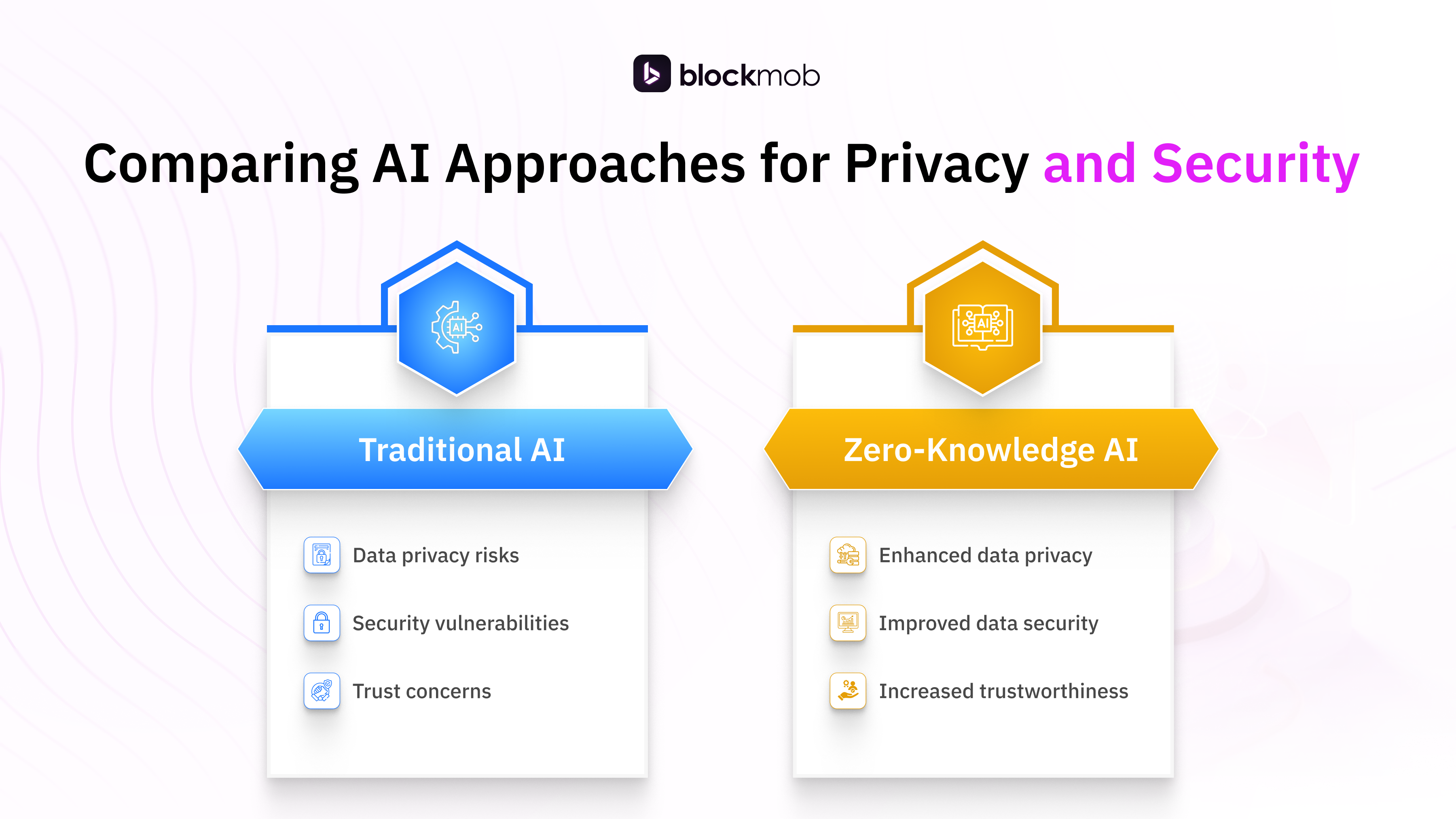
Imagine you’re training an AI to predict loan approvals or medical results, but to do that, it needs access to sensitive personal data. The problem is, sharing such data comes with serious privacy risks.
Now imagine if the AI could learn from your data without ever actually seeing it. That’s the idea behind Zero-Knowledge Machine Learning (ZKML), a new field combining AI and blockchain to make intelligent systems more private, secure, and trustworthy.
This is where the next wave of Web3 innovation is emerging, one where AI works transparently, without exposing what’s private.
What Is Zero-Knowledge Machine Learning (ZKML)?
To understand ZKML, let’s break it into two simple ideas:
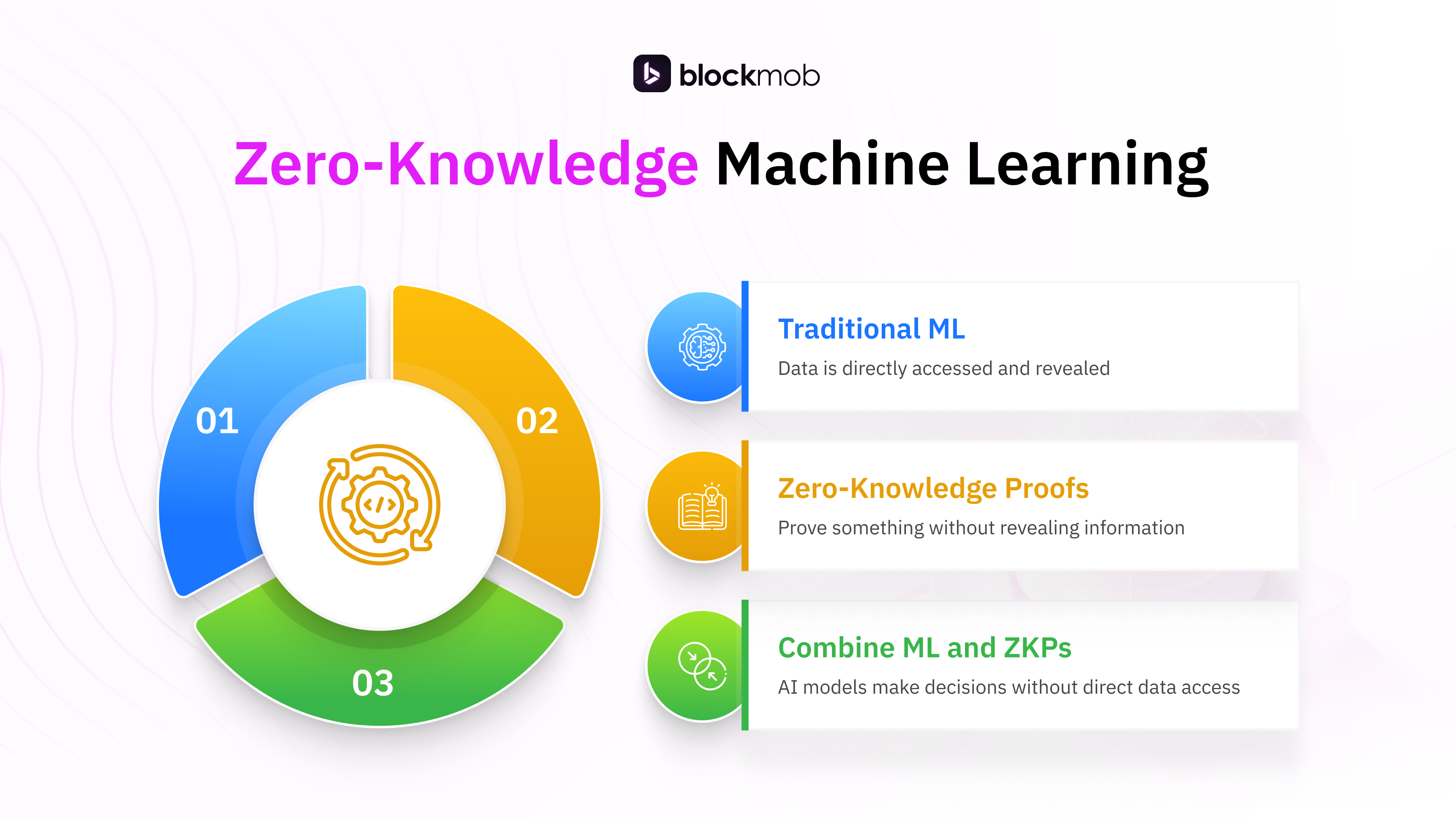
- Machine Learning (ML): Systems that learn from data to make predictions or decisions, like spam filters, chatbots, or credit scoring.
- Zero-Knowledge Proofs (ZKPs): A cryptographic method that allows someone to prove something is true without showing the actual information.
Now, when we combine the two, we get ZKML, a way for AI models to make or verify decisions without directly accessing or revealing your data.
Think of it like asking a chef to prepare your meal based on a secret recipe but without ever seeing the recipe itself. The chef still makes the meal perfectly, but your secret stays safe.
Why Does This Matter for Blockchain and Businesses?
Blockchain already gives us transparency and trust, but not always privacy. ZKML bridges that gap.
Here’s why it’s a big deal for enterprises:
- Data Privacy Compliance: Businesses can train AI models while staying compliant with privacy laws like GDPR or HIPAA.
- Trust in AI Decisions: Users can verify AI results on-chain, knowing they’re accurate without exposing confidential data.
- Secure Collaboration: Companies can collaborate on shared data insights without revealing internal information to competitors.
In short, ZKML lets organisations use AI responsibly within decentralised systems, a core value for the future of digital trust.
How Does It Work (In Simple Terms)?
Let’s say a bank wants to check if someone is eligible for a loan.
Normally, the AI model would analyse private data like income, spending habits, and credit history.
With ZKML:
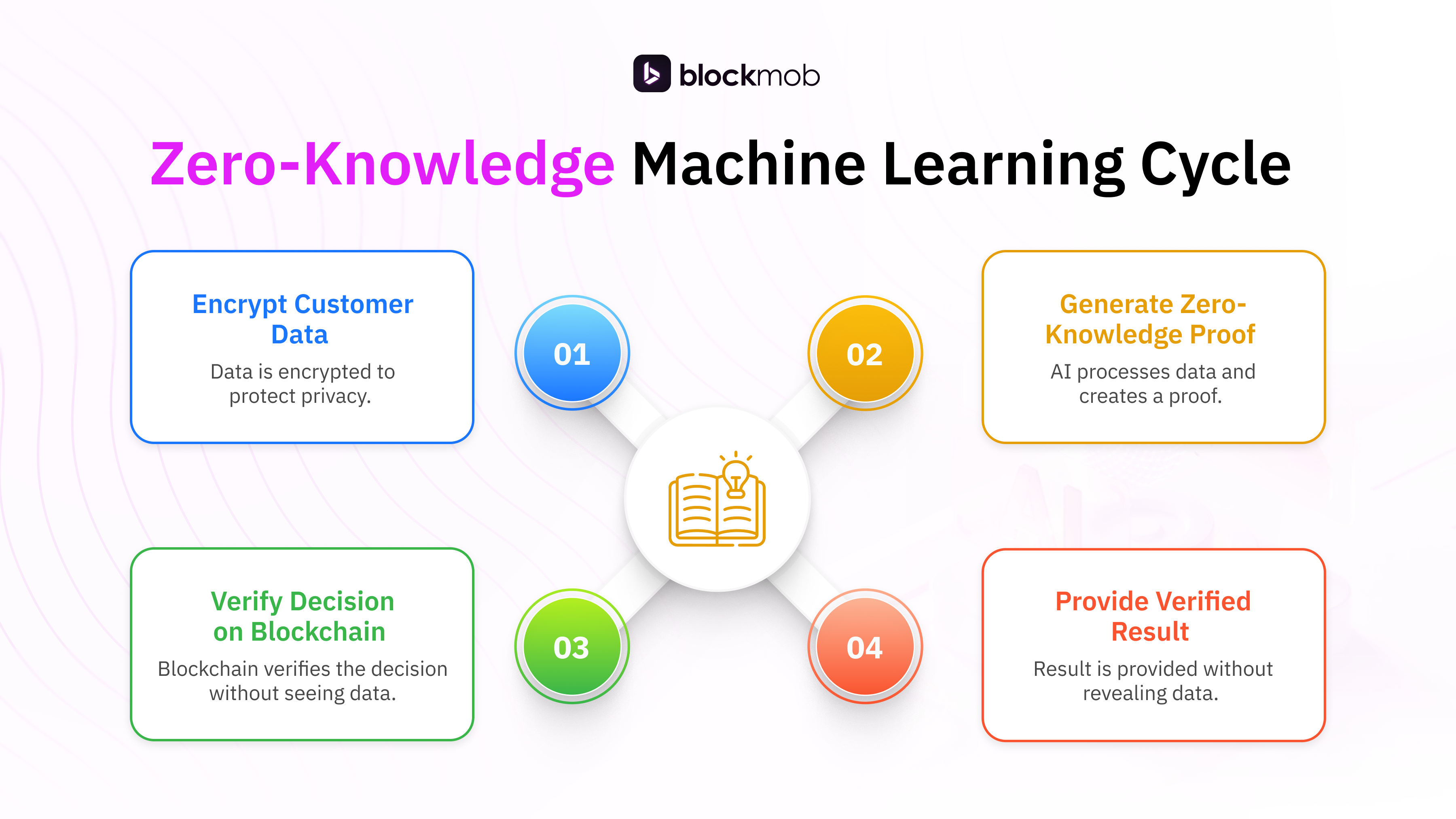
- The customer’s data stays encrypted.
- The AI processes this data privately and generates a zero-knowledge proof.
- The blockchain verifies that the decision (approve or deny) is correct without ever seeing the customer’s details.
It’s like proving you’re above 18 without showing your birth certificate, just the verified result.
Where Is ZKML Being Used Today?
Even though it’s a new field, several industries are already experimenting with ZKML:
- Finance: For private credit scoring and lending models without leaking user financial history.
- Healthcare: Hospitals can train AI models across multiple clinics without sharing patient data.
- Supply Chains: Verifying ethical sourcing or compliance without disclosing supplier identities.
- DeFi Platforms: Securely validating risk models and predictions for trading bots on-chain.
These early use cases are showing that ZKML isn’t just a concept; it’s becoming a core layer of privacy infrastructure for Web3 systems.
Challenges to Solve Before It Goes Mainstream
Like all emerging technologies, ZKML faces its own hurdles:
- Computational Cost: Generating zero-knowledge proofs takes more processing power.
- Model Complexity: Applying ZK proofs to large AI models is technically challenging.
- Developer Tools: The ecosystem for ZKML development is still young and evolving.
However, with advancements in hardware acceleration and efficient proof systems, these limitations are shrinking fast.
Why ZKML and Web3 Belong Together
Web3 is all about ownership, transparency, and trust. But to make decentralised systems more intelligent, they need AI.
ZKML acts as the bridge bringing AI’s intelligence to Web3’s privacy-first world.
For example:
- A decentralised marketplace could use ZKML to recommend products without tracking users.
- A blockchain insurance app could assess risks without exposing personal details.
This alignment of AI, Blockchain and Privacy is what’s driving the next generation of applications.
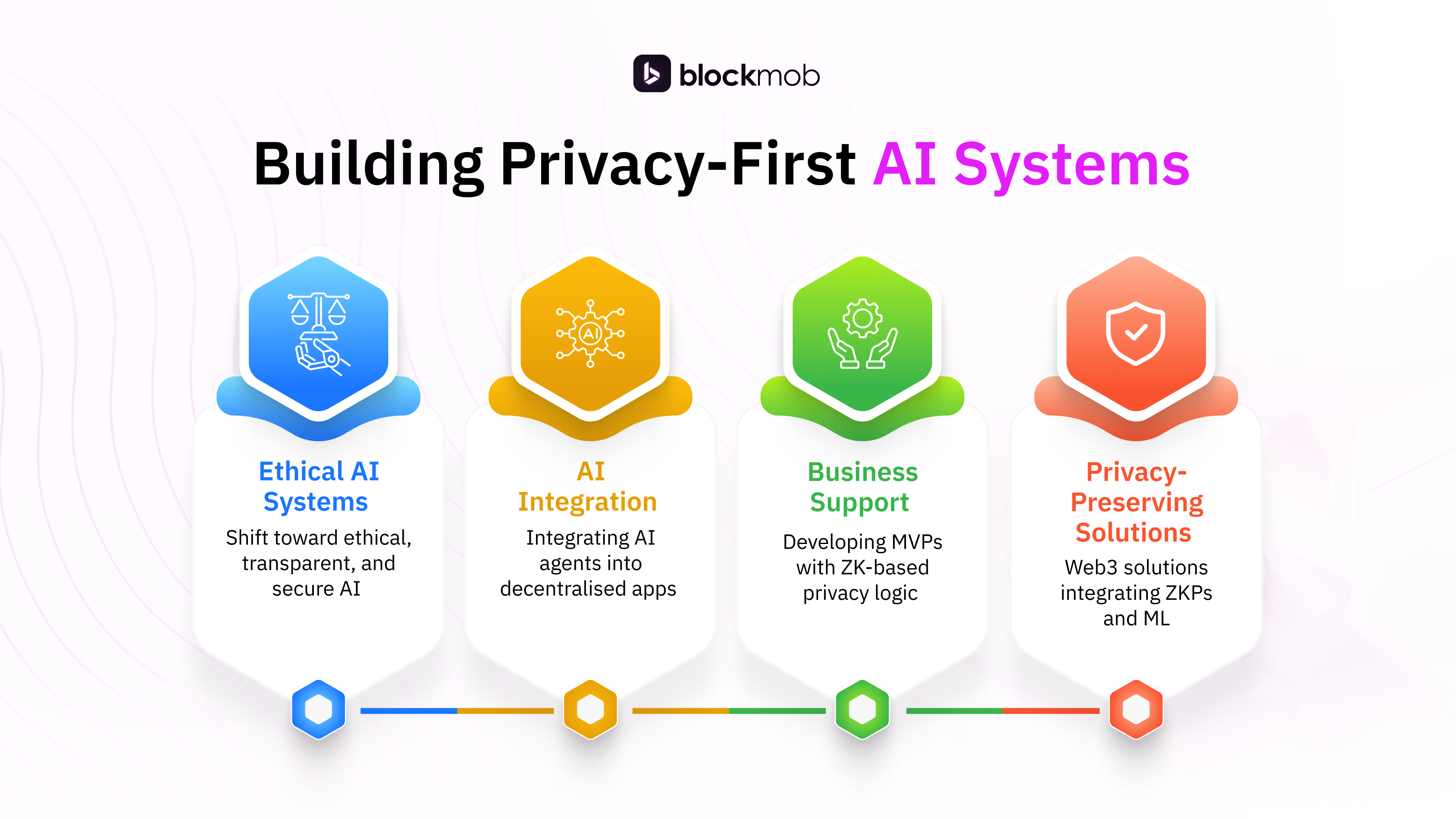
How BlockMob Labs Helps Build Privacy-First AI Systems
At BlockMob Labs, our team builds privacy-preserving Web3 solutions that integrate technologies like Zero-Knowledge Proofs, Machine Learning, and smart contracts.
We help businesses:
- Design and develop MVPs that use ZK-based privacy logic.
- Build multi-chain architectures for data validation and transparency.
- Integrate AI agents into decentralised apps while maintaining user trust.
Our goal is to empower organisations to innovate responsibly where intelligence meets privacy.
The Future of ZKML in Web3
ZKML is more than a technical upgrade; it’s a shift toward ethical, transparent, and secure AI systems.
As enterprises move deeper into blockchain ecosystems, privacy will no longer be optional; it will be a necessity. And ZKML will play a central role in making that possible.
Conclusion: The Smartest AI Is the One That Keeps Secrets
We’re entering a world where AI doesn’t need your data; it simply needs your trust.
With Zero-Knowledge Machine Learning, businesses can finally combine intelligence and privacy on a decentralised foundation.
If you’re exploring how AI and blockchain can work together for your business, Blockmob Labs can help you build that future safely, securely, and with real-world results.


