


The Future of Real Estate: How Blockchain is Changing Property Ownership

Discover how blockchain is transforming real estate with transparency, security, and tokenisation. Learn what this shift means for buyers, sellers, and investors.
Imagine buying a home without piles of paperwork, months of waiting, or expensive intermediaries. Imagine confirming ownership instantly, securely, and transparently, all online. Sounds like a dream? Thanks to blockchain technology, that dream is becoming reality.
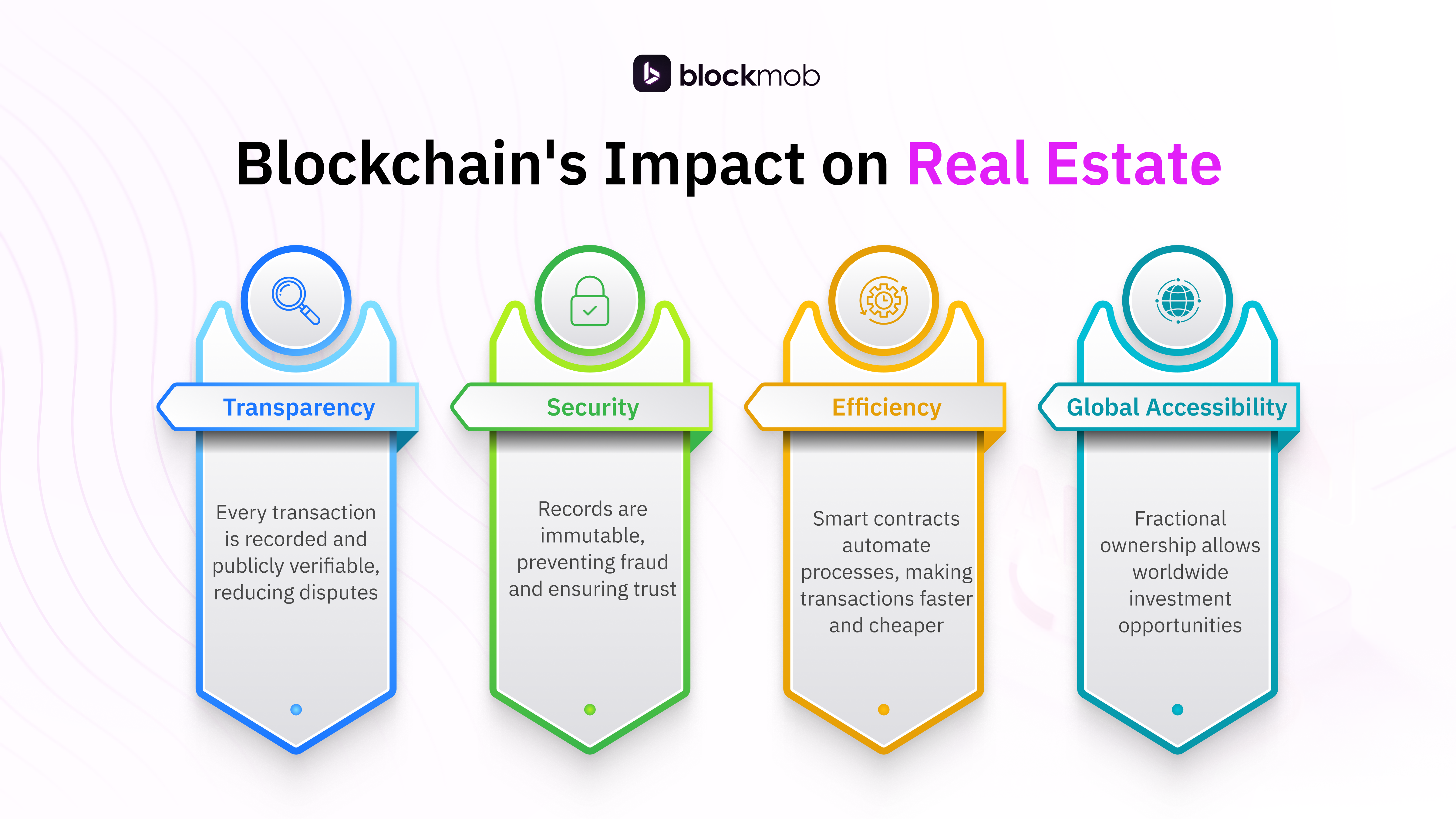
Real estate has long been one of the slowest and most complex industries. From verifying ownership to handling payments and taxes, every step often involves intermediaries, long timelines, and significant costs. But blockchain is changing the game by digitising and securing property ownership in ways that were previously impossible.
In this blog, we’ll explore how blockchain is transforming real estate, what it means for buyers, sellers, and investors, and the opportunities and challenges that lie ahead.
Traditional Real Estate Challenges
Before we dive into blockchain, it’s important to understand why change is necessary. Traditional real estate processes have several long-standing challenges:
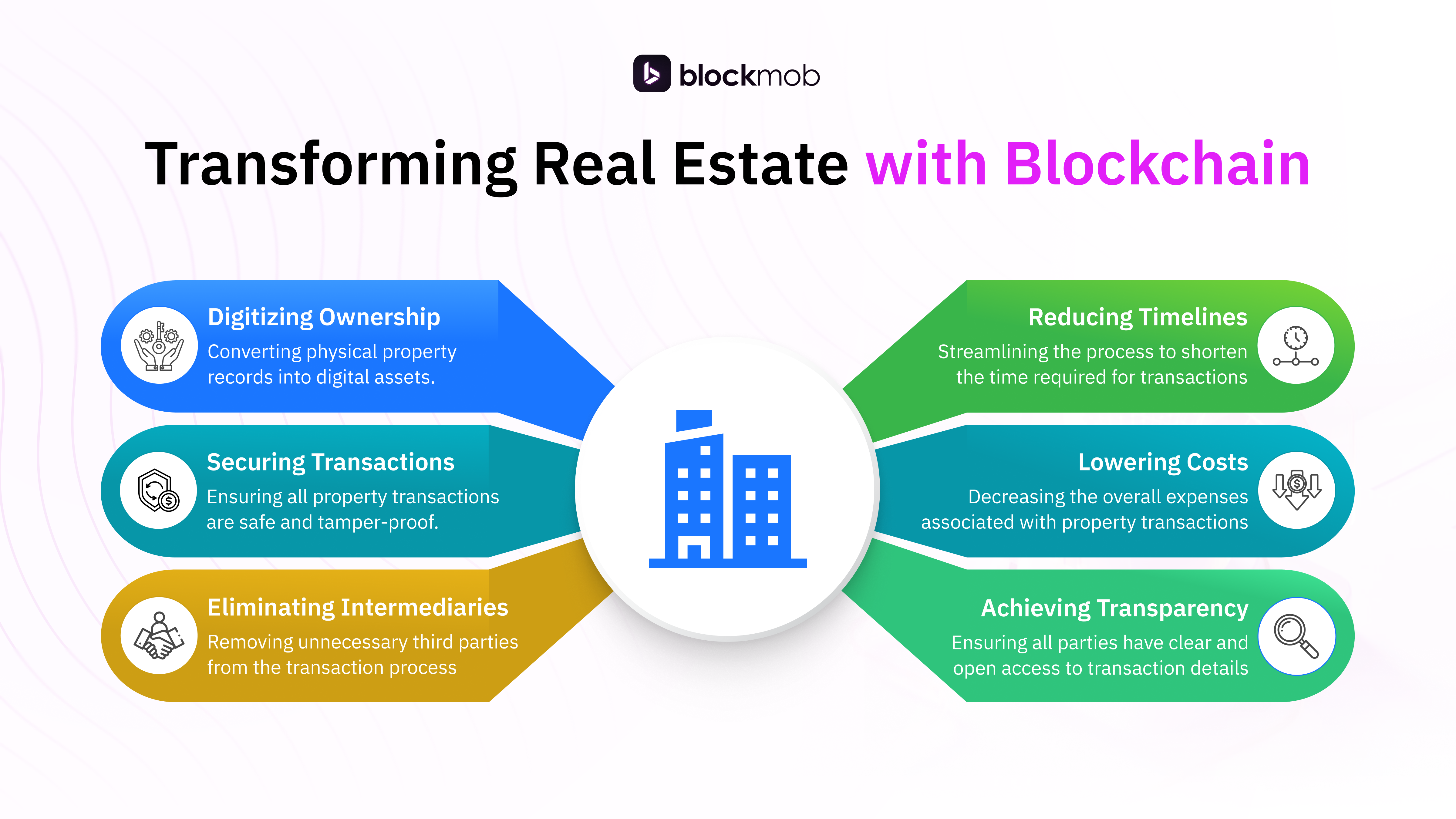
Lengthy paperwork and verification: Buying property typically involves banks, lawyers, notaries, and government offices. Verifying property titles and ownership can take weeks or months.
Fraud and unclear titles: Property fraud is a common problem worldwide. Duplicate titles or inaccurate records can create legal battles for years.
High transaction costs: Fees for brokers, lawyers, and intermediaries can make property purchases expensive.
Limited access for investors: International property investment is complicated due to differences in legal systems and a lack of transparency.
For example, someone in another country wanting to invest in a property abroad may face months of paperwork and uncertainty about the property’s legitimacy. These issues make real estate frustrating for both buyers and sellers.
What Blockchain Brings to Real Estate
Blockchain is often described as a secure, digital ledger, and in simple terms, that’s exactly what it is. Each transaction is recorded in a decentralised, tamper-proof ledger that can be verified by anyone, anytime. When applied to real estate, this creates huge benefits:
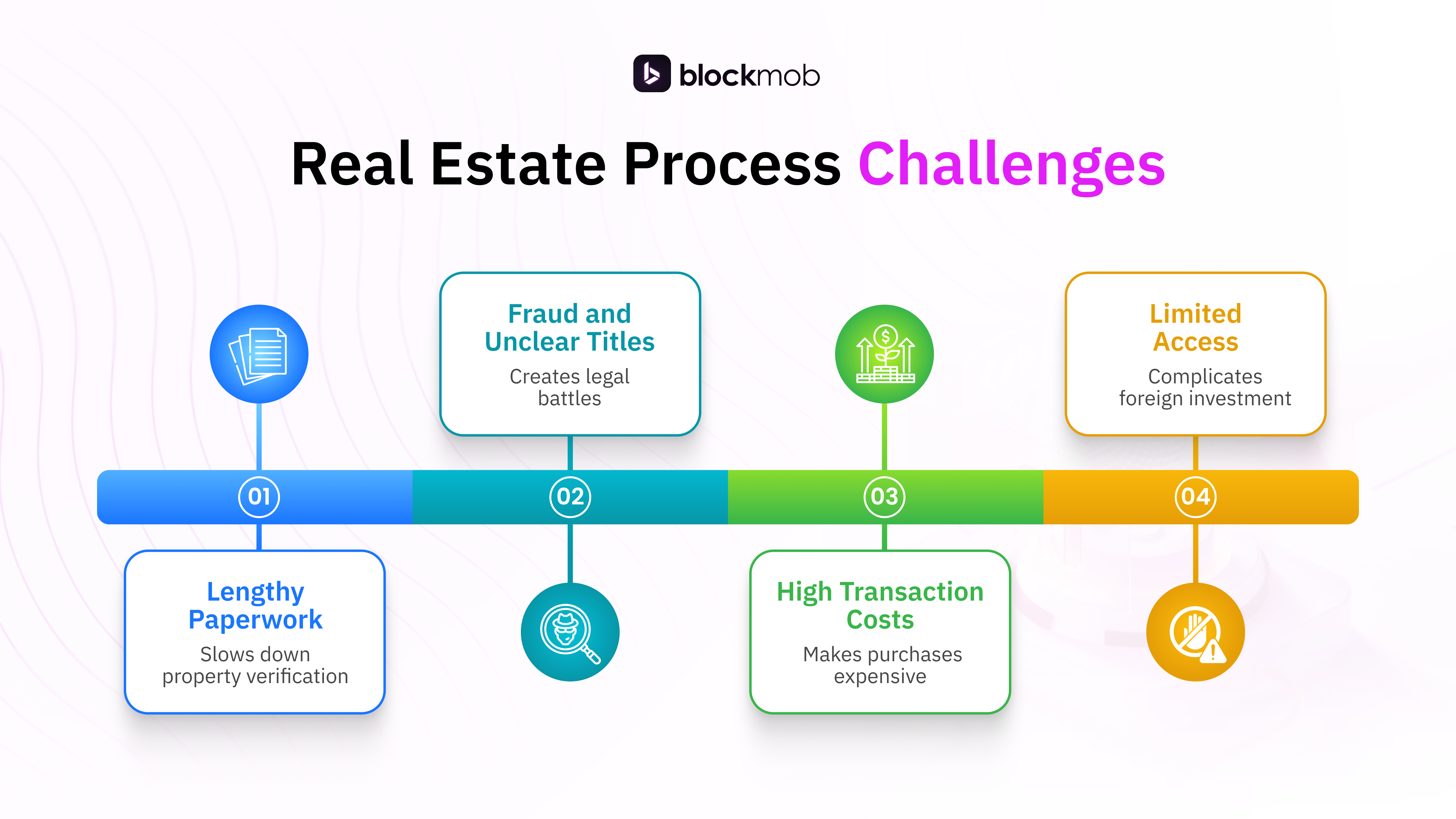
Transparency: Every property transaction is recorded and publicly verifiable. Buyers and sellers can instantly confirm ownership, reducing disputes.
Security: Records on the blockchain are immutable, meaning they cannot be altered or forged. This greatly reduces the risk of fraud.
Efficiency: Smart contracts automate processes like payment releases, ownership transfers, and escrow management, making transactions faster and less costly.
Global accessibility: Blockchain allows fractional ownership, letting investors buy small shares of properties anywhere in the world. This opens real estate investment to a wider audience.
Think of it this way: blockchain acts like a digital title deed that can’t be lost, altered, or misused. The entire process becomes more streamlined, transparent, and secure.
Real-World Examples of Blockchain in Property
Blockchain in real estate is no longer theoretical; it’s happening now.
Tokenisation of property: Companies are converting real estate assets into digital tokens. Each token represents a fraction of a property, which investors can buy and trade like stocks. This allows anyone, even with small amounts, to invest in prime real estate.
Digital property titles and smart contracts: Platforms now allow ownership records to be stored on the blockchain. Smart contracts automatically execute sales, transfers, or rental agreements when conditions are met, eliminating delays and human error.
Government experiments: Several countries are exploring blockchain-based land registries. For instance, Dubai and Sweden have tested storing property records on the blockchain to prevent fraud and improve efficiency.
How This Impacts Buyers, Sellers, and Investors
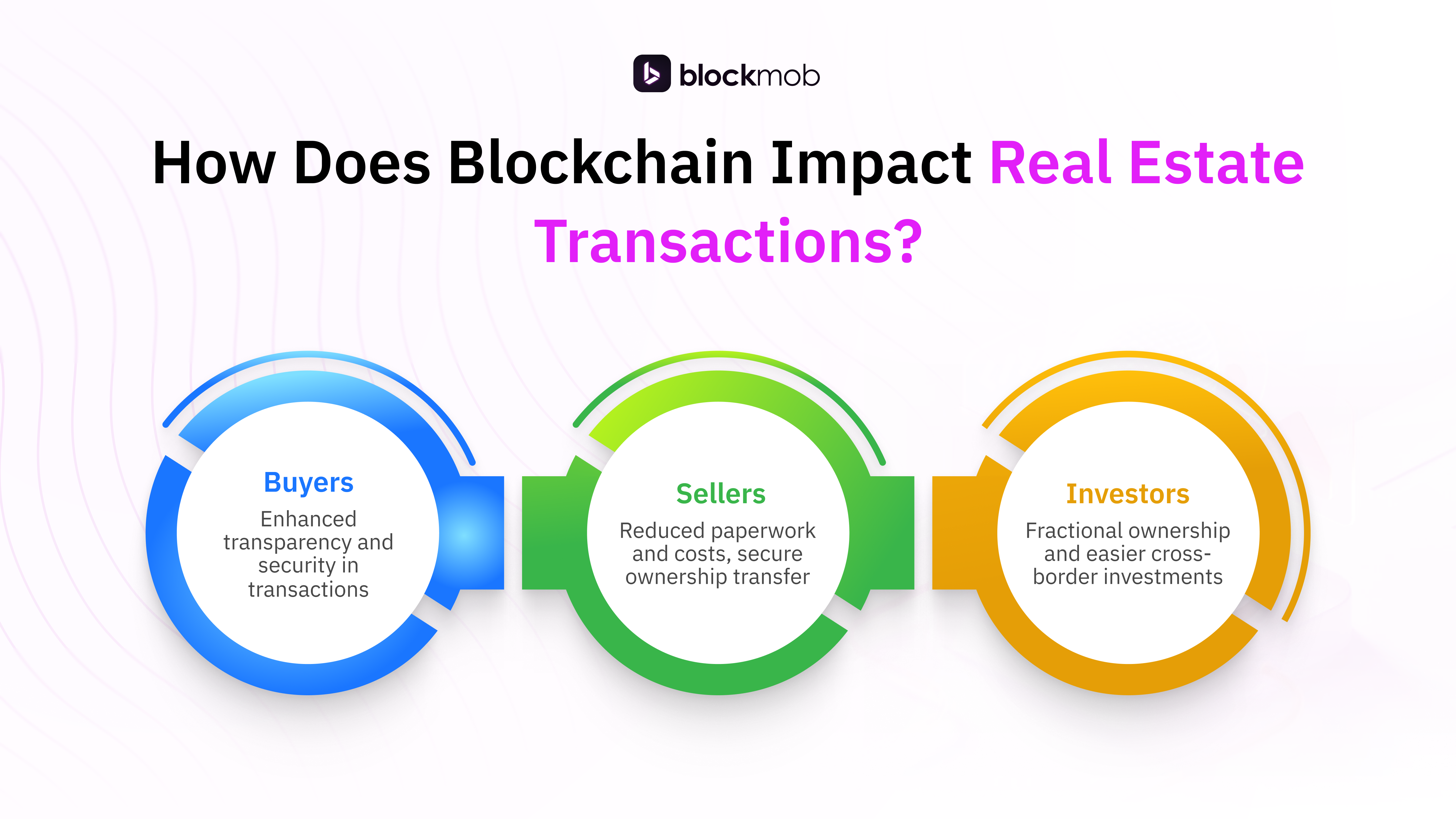
Buyers: With blockchain, buyers experience greater transparency and security. They can verify ownership instantly and complete purchases faster without relying on multiple intermediaries.
Sellers: Property owners can transfer ownership securely, reduce paperwork, and save on intermediary costs. This efficiency makes selling property less stressful and more attractive.
Investors: Fractional ownership allows investors to participate in high-value properties with smaller amounts of capital. Cross-border investments become easier because blockchain removes many legal and bureaucratic hurdles.
For example, an investor in Asia could buy a fraction of a commercial building in Europe without waiting months for bank approvals or legal verification.
Challenges and Considerations
While blockchain offers tremendous potential, it is not without challenges:
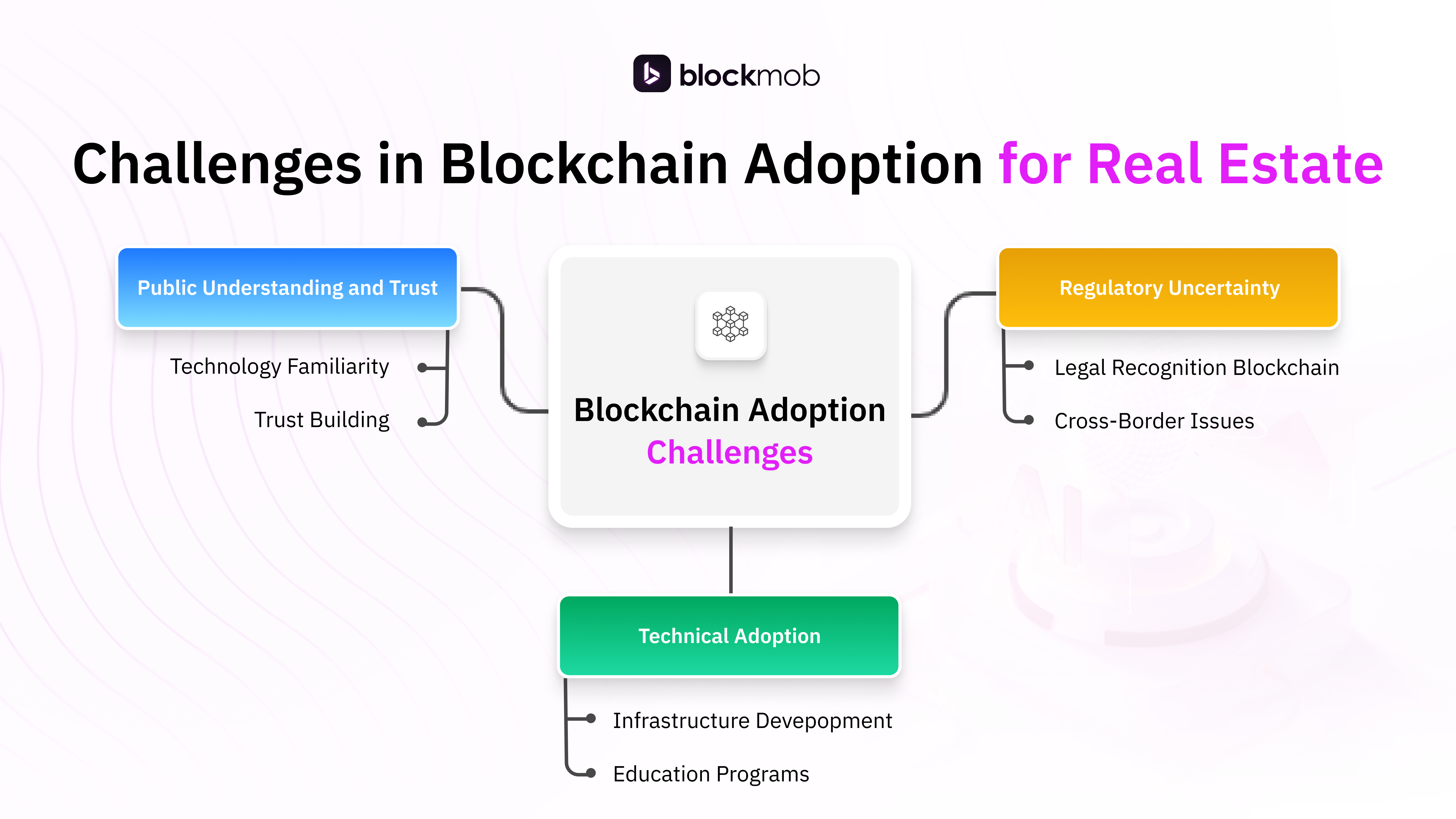
Regulatory uncertainty: Laws around blockchain and digital property ownership vary across countries. Not all governments recognise blockchain-based property records as legally binding.
Technical adoption: Integrating blockchain into existing property systems requires infrastructure, technology, and education.
Public understanding and trust: Many people are still unfamiliar with blockchain. For widespread adoption, both buyers and sellers need to trust the technology and understand how it works.
Despite these hurdles, the trend toward digital real estate ownership is clear and growing.
Conclusion
Blockchain is not replacing real estate, but it is making property ownership faster, safer, and more transparent. Buyers benefit from clarity and efficiency, sellers save time and money, and investors gain new opportunities through fractional ownership.
The future of real estate is digital, and early adoption of blockchain solutions can provide a competitive edge in this rapidly evolving industry.
Curious how blockchain can transform your real estate business or investments? At Blockmob Labs, we help clients implement blockchain solutions for property ownership, tokenisation, and secure digital transactions. From consulting to practical deployment, our team guides you through every step of adopting digital real estate solutions efficiently and safely.


