

.png)
The Future of Crypto Wallets | AI-Powered, Secure & User-Centric Web3 Design

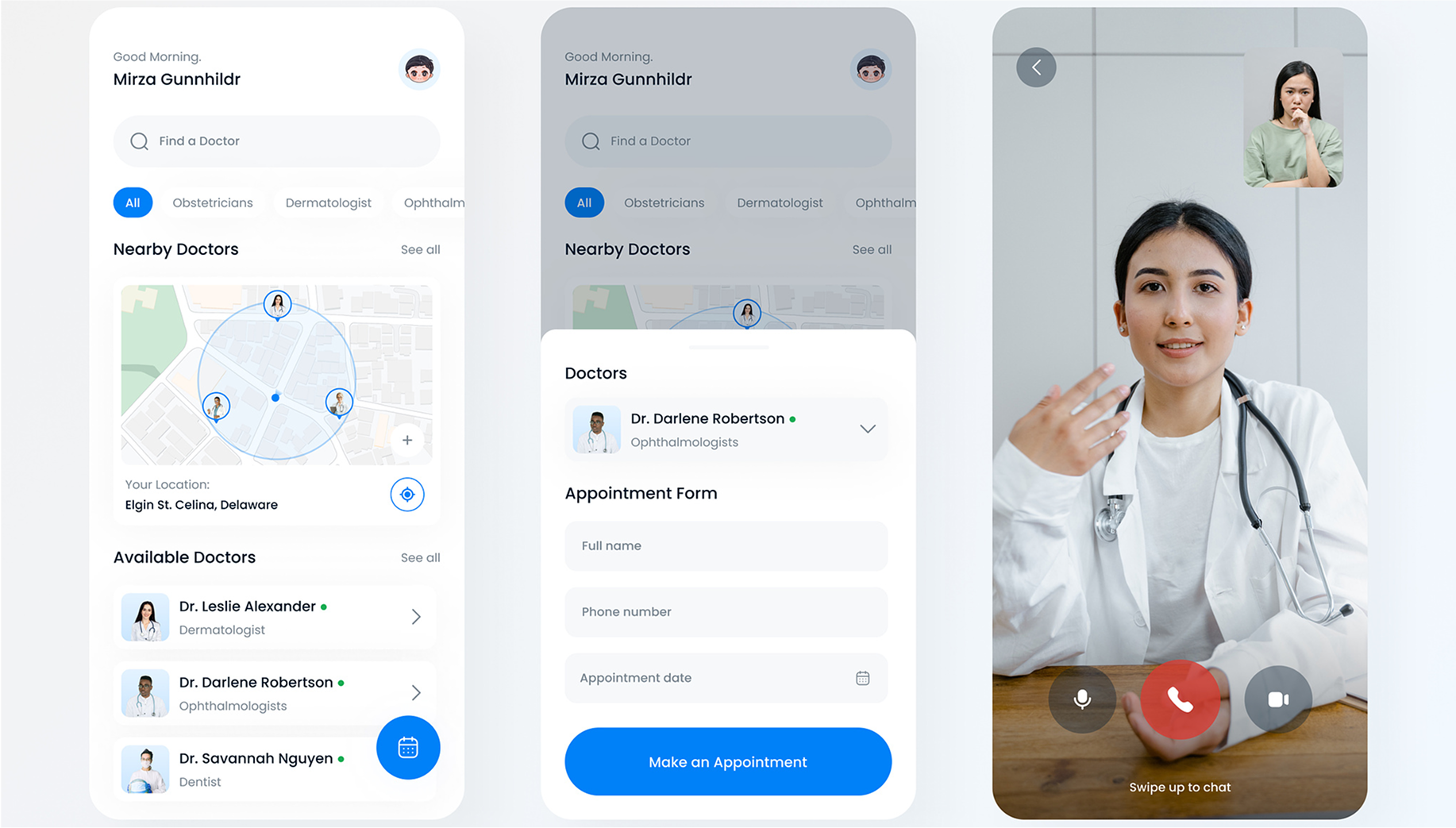
Discover how next-generation crypto wallets blend AI, security, and user experience. Learn how Blockmob Labs builds the infrastructure behind secure, intelligent, and human-first Web3 wallets like Gaya.
For years, crypto wallets were designed for early adopters, engineers, traders, and a select few who understood private keys. But as Web3 moves into mainstream adoption, that’s no longer enough. The next generation of wallets isn’t just about storing crypto. It’s about simplifying ownership, protecting users, and leveraging AI to make decentralised finance as easy as online banking.
The Evolution of Crypto Wallets
Early wallets like MetaMask and Trust Wallet helped millions access blockchain ecosystems, but they often lacked simplicity. Managing seed phrases, dealing with high gas fees, and handling security manually created friction for users.
In 2025, wallet innovation is being redefined around three priorities:
- Security that doesn’t overwhelm users
- AI-driven personalization
- Interfaces built for everyday users, not just crypto-natives
This evolution has created a new category of wallet products that blend decentralisation with design thinking and intelligent automation.
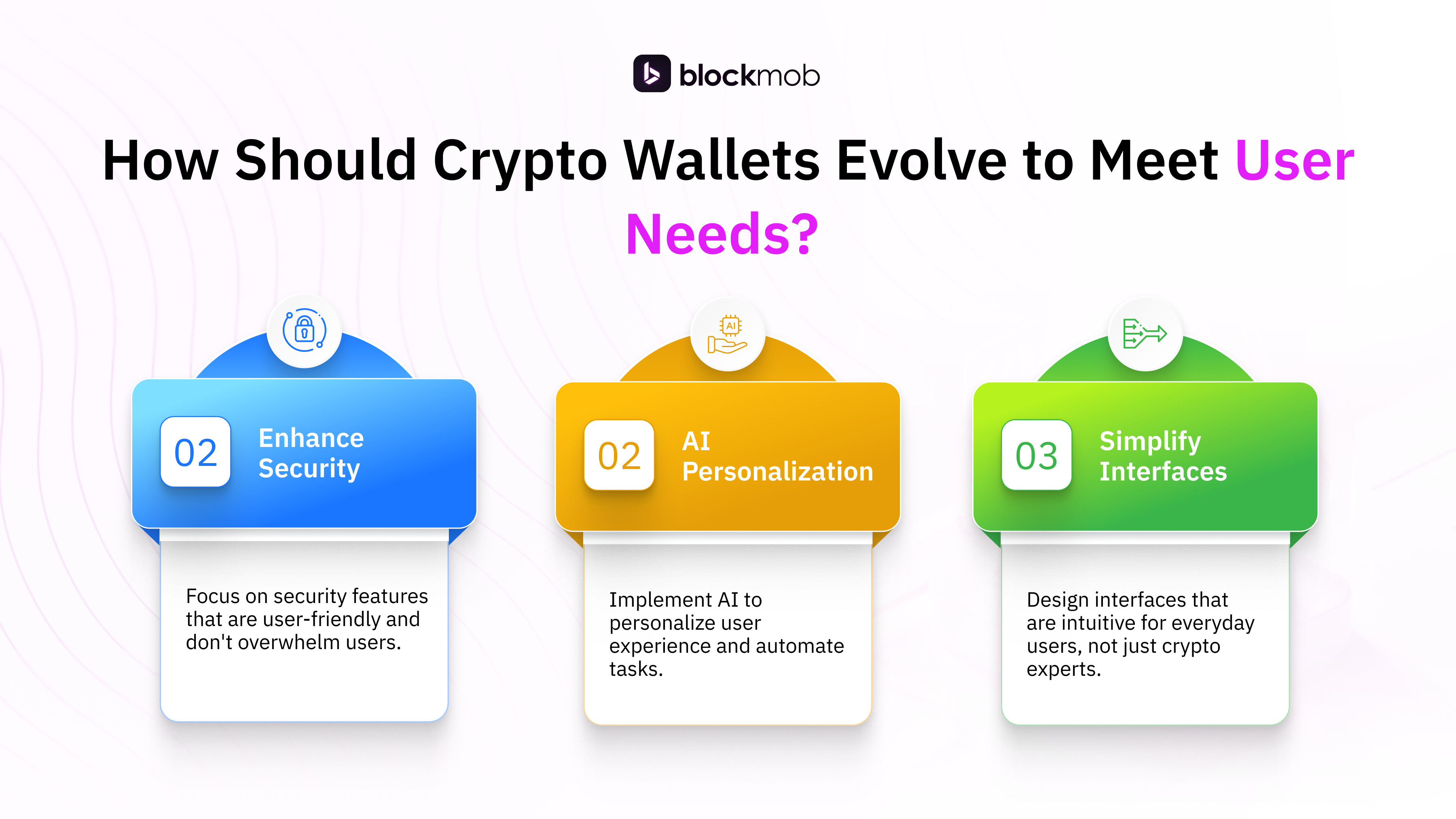
Better Security and Smoother Operations: The New Standard
Security in Web3 must move beyond passwords and seed phrases.
Next-generation wallets like Gaya Wallet, built by Blockmob Labs, implement non-custodial architecture, meaning the user always holds their private keys.
But security isn’t only technical, it’s also psychological. Gaya’s UI reduces cognitive load by guiding users through swaps, staking, and transactions safely. The goal is to make secure actions feel natural, not intimidating.
How AI Is Transforming Wallets
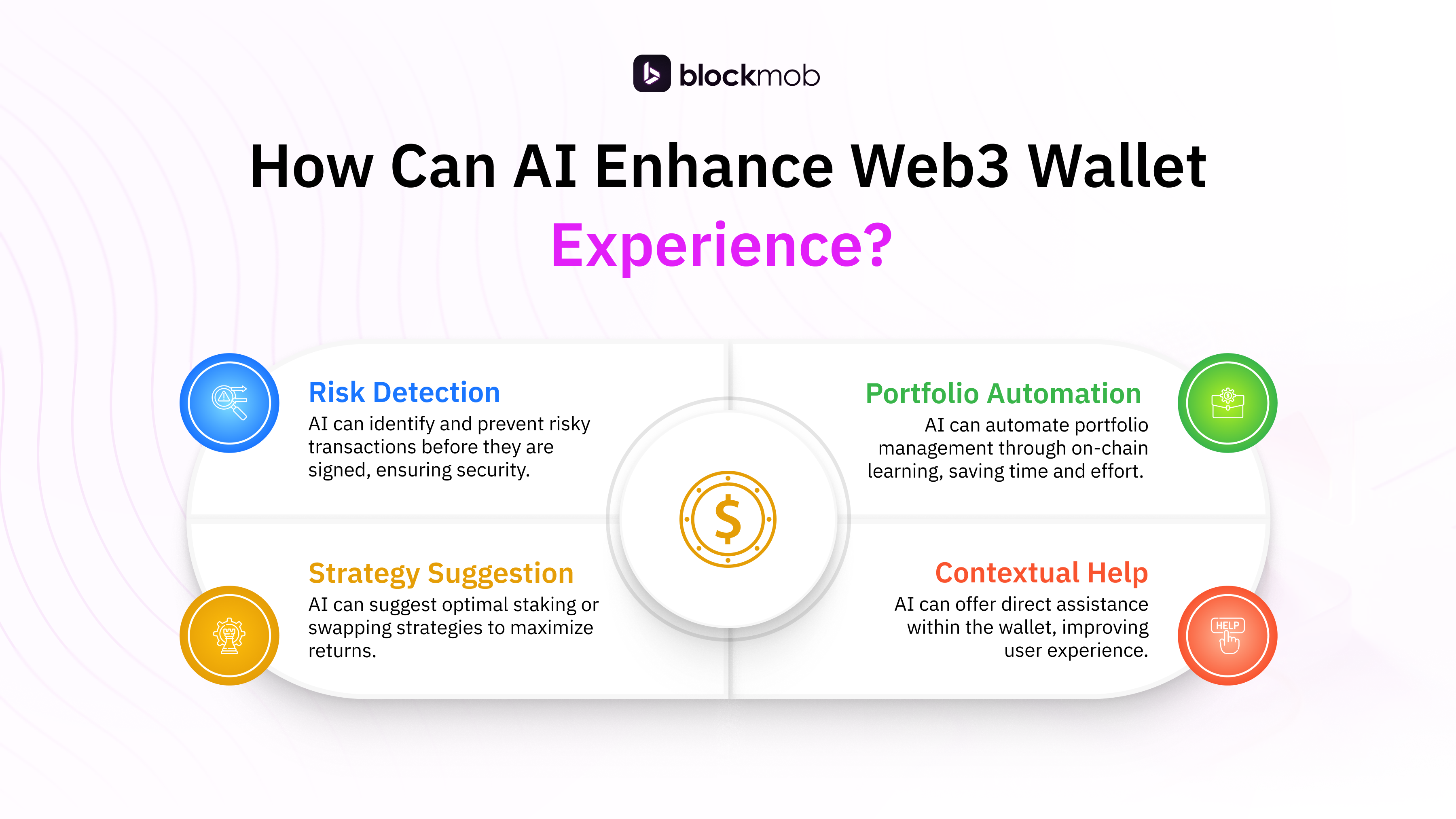
Artificial intelligence is quietly changing the way users interact with Web3. AI-powered wallets are expected to:
- Detect risky transactions before they’re signed
- Suggest optimal staking or swapping strategies
- Automate portfolio management through on-chain learning
- Offer contextual help directly inside the wallet
In Gaya’s roadmap, AI assistance plays a core role in analysing behaviour to offer insights and help users make smarter, safer choices without giving up control.
User-Centric Design: The Missing Link in Web3
Most wallets fail not because of code, but because of complexity.
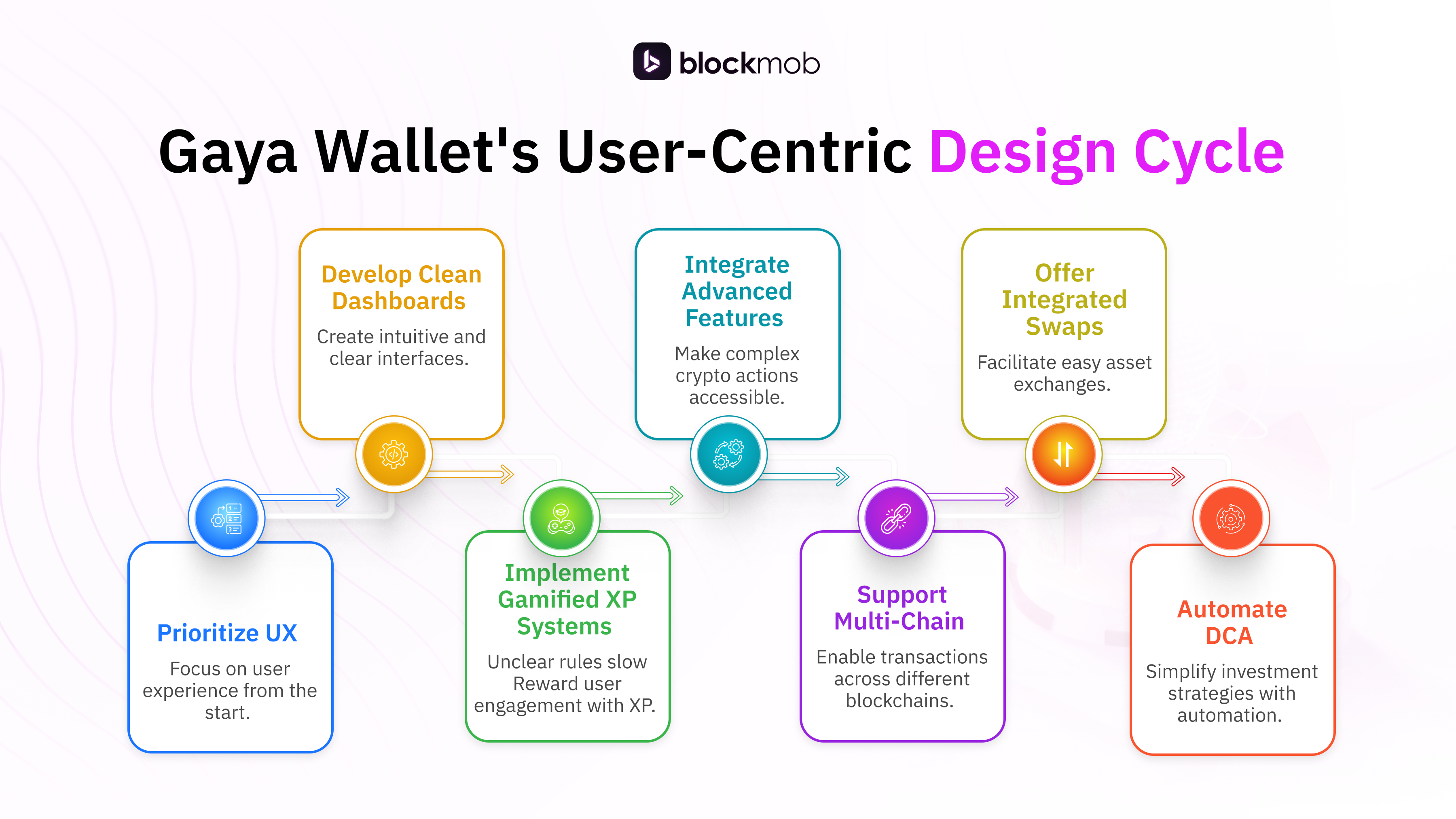
Gaya Wallet flips this by prioritising UX from day one, clean dashboards, clear asset tracking, and gamified XP systems that reward engagement.
This design-first approach ensures that both beginners and experienced users feel in control. Features like multi-chain support, integrated swaps, and DCA automation make advanced crypto actions accessible through an intuitive design.
The Business Perspective: Why Wallet UX Matters
For startups and enterprises entering Web3, wallets are no longer optional add-ons; they’re the entry points to decentralised ecosystems.
A secure and frictionless wallet experience builds user trust, which directly drives adoption and retention.
At Blockmob Labs, the approach to wallet development is full-stack, combining secure smart contract logic, multi-chain backend engineering, and human-first design systems.
From front-end animations to blockchain-level audits, every layer aligns toward one goal: to make decentralisation usable.
Real-World Impact: The Gaya Example
Gaya Wallet demonstrates what the future of user-centric Web3 design looks like.
- Users can buy, swap, stake, and track assets across Ethereum, Solana, XRP, and BNB all in one interface.
- The DCA Engine automates investment strategies, letting users buy in small amounts over time.
- Gamified XP systems reward engagement and create a sense of progress.
These features, once complex, are now available through a few clicks, showcasing how design and blockchain engineering can align to remove barriers to entry.
Looking Ahead: The Age of AI-Integrated Self-Custody
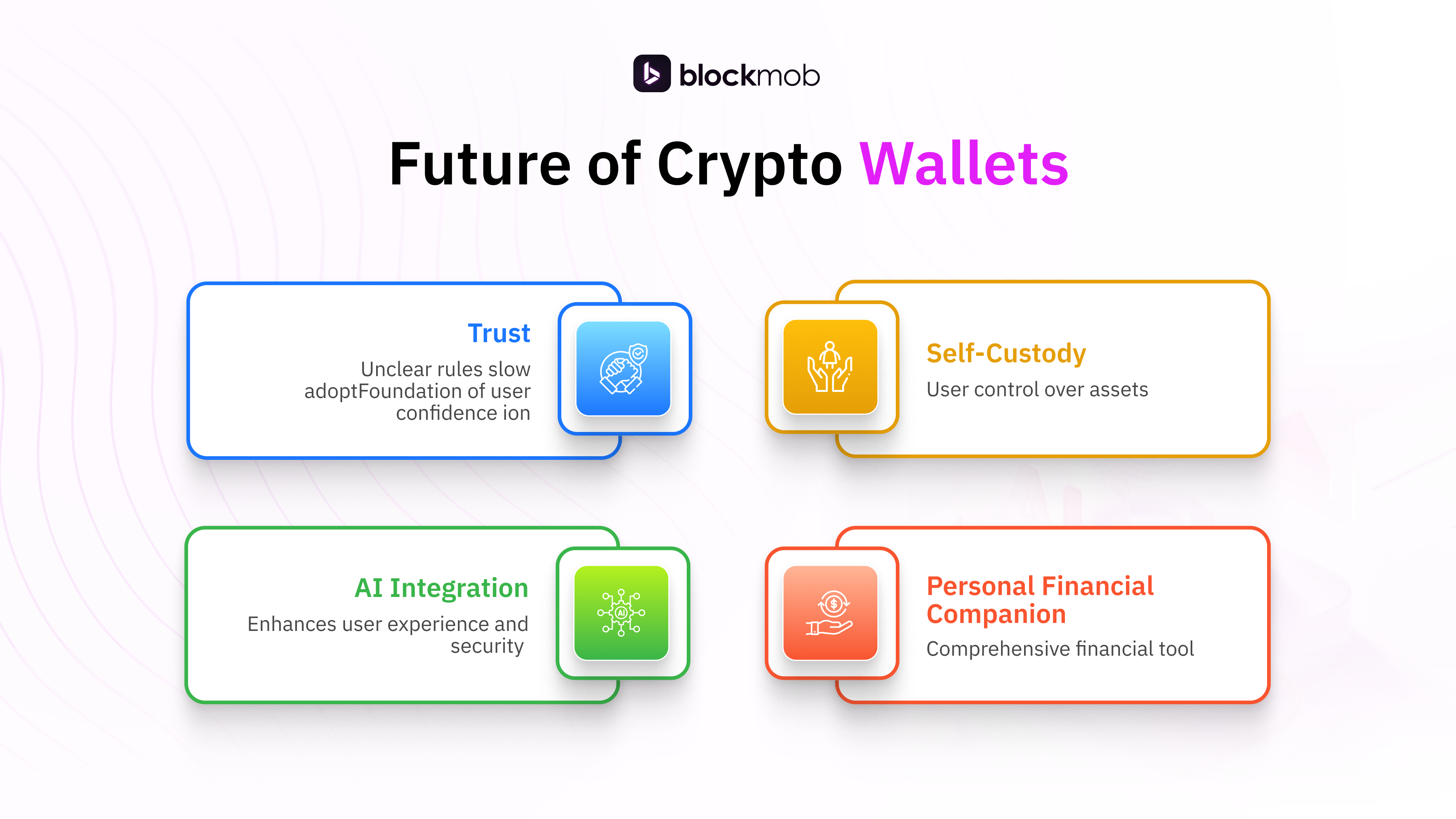
By 2026, wallets will become more like personal financial companions, secure, intelligent, and self-custodial.
AI will help users identify opportunities, understand risks, and even learn about protocols in real time, all while maintaining decentralisation.
The winners in this next wave won’t just be wallets. They’ll be builders who understand how to merge technology with trust.
Conclusion: Building the Next Generation of Web3 Experiences
Crypto wallets are evolving from simple key managers into smart gateways for the decentralised economy.
Projects like Gaya Wallet are leading this shift, showing how security, AI, and user experience can coexist.
For businesses exploring similar solutions, now is the time to build.
Looking to develop your own secure, AI-ready Web3 wallet? Blockmob Labs can help you design, develop, and scale it from concept to launch.


