

.png)
MiCA vs. SEC: Navigating Global Crypto Regulation

Explore how Europe’s MiCA and the U.S. SEC are shaping the future of crypto regulation. Learn what global businesses must know to stay compliant and innovate confidently.
The crypto world has always been a mix of innovation and uncertainty. On one side, new technologies like DeFi, NFTs, and tokenisation are reshaping how money and ownership work. On the other hand, governments are struggling to set clear rules.
Two major forces are shaping the future of crypto regulation: Europe’s MiCA (Markets in Crypto-Assets Regulation) and the U.S. Securities and Exchange Commission (SEC).
While both aim to protect investors and bring stability, they follow very different paths. For businesses, startups, and investors building in Web3, understanding these two approaches is no longer optional; it’s essential.
What is MiCA?
MiCA stands for Markets in Crypto-Assets Regulation, a framework passed by the European Union in 2023. It’s the first major attempt to create clear, unified crypto laws across Europe.
Think of MiCA as Europe’s way of saying: “Let’s stop guessing what’s legal and what’s not.”
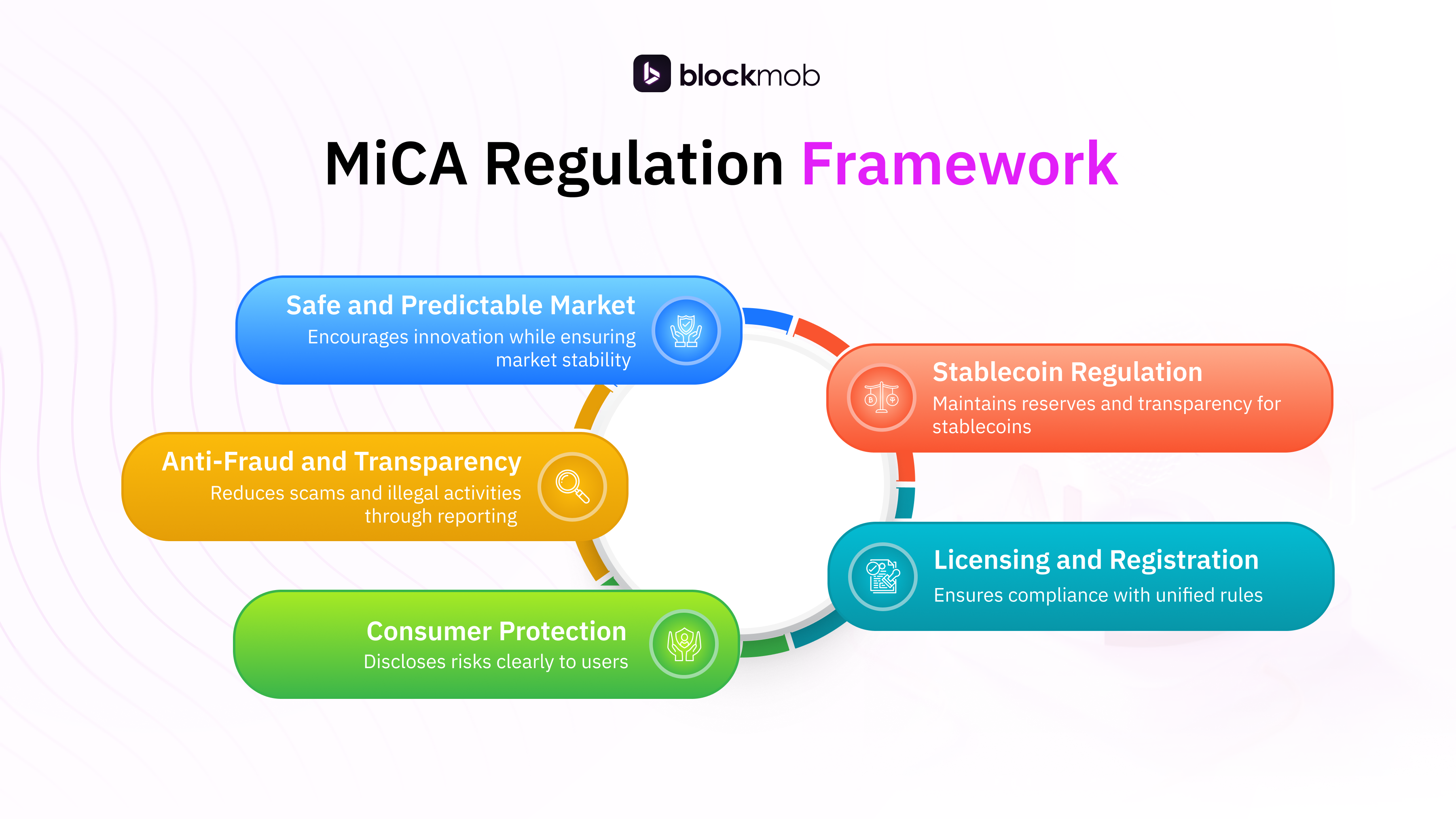
Here’s what MiCA focuses on:
- Licensing and Registration: Any company offering crypto services in the EU must register and follow the same rules in all member states.
- Stablecoin Regulation: Projects like USDT or EURC must maintain proper reserves and transparency.
- Consumer Protection: Exchanges and wallet providers must disclose risks clearly to users.
- Anti-Fraud and Transparency: Strict reporting standards to reduce scams and illegal activities.
Goal: Encourage innovation while making the market safe and predictable.
In short, MiCA tries to balance freedom with responsibility, allowing growth without chaos.
What is the SEC Doing in the U.S.?
The Securities and Exchange Commission (SEC), led by Gary Gensler, is the main body regulating crypto in the United States.
But unlike MiCA, the SEC doesn’t have a new law just for crypto. Instead, it uses existing securities laws, some written back in the 1930s, to decide what counts as a “security.”
That means if a crypto project behaves like a company selling shares to investors, the SEC treats it as a security token that must follow stock market rules.
Some key points of the SEC’s stance:
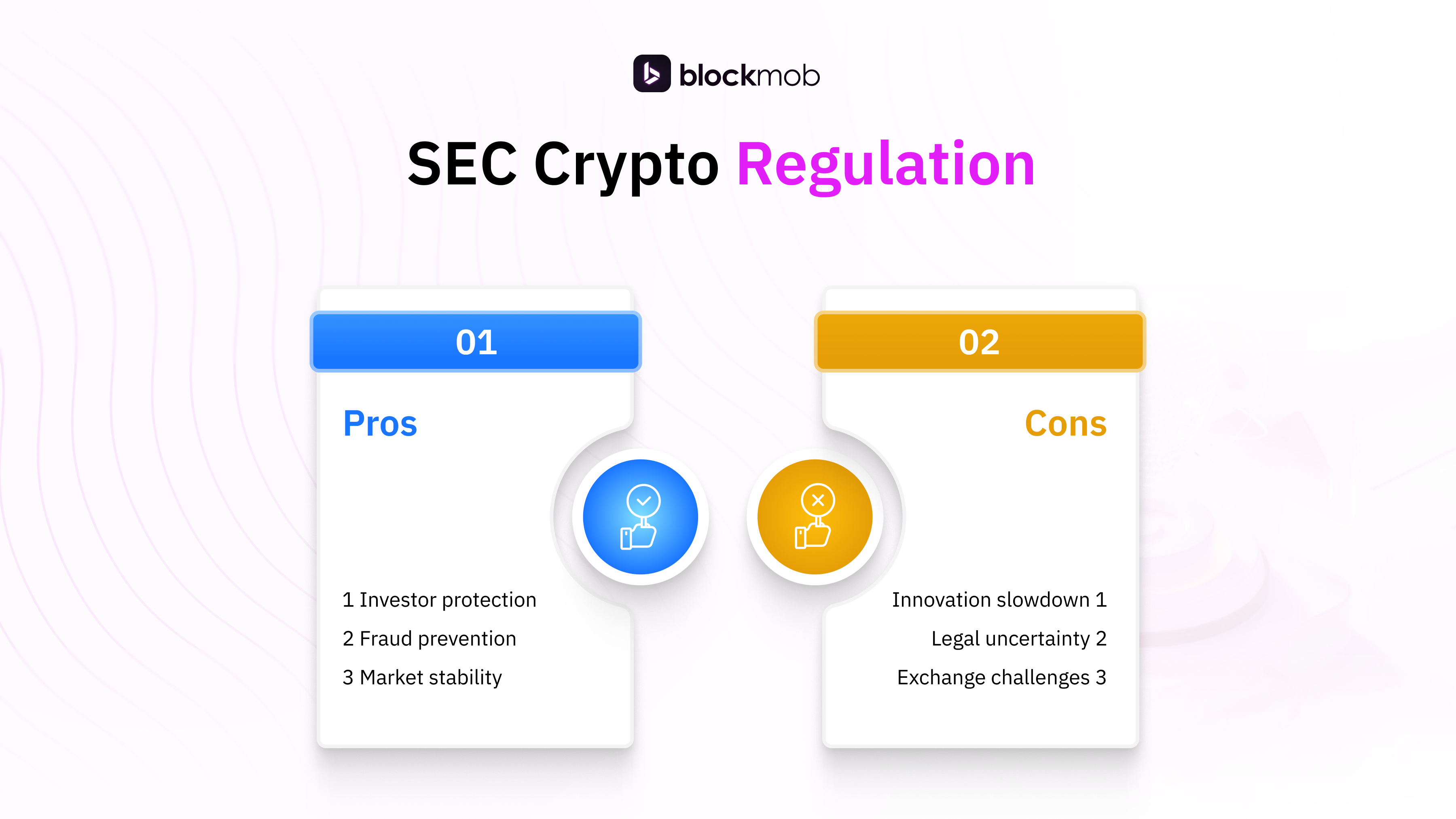
- Many tokens are considered securities, requiring registration or exemption.
- Exchanges like Coinbase and Binance have faced lawsuits for listing unregistered tokens.
- The focus is on protecting investors and preventing fraud, sometimes at the cost of innovation.
Goal: Prevent the crypto market from becoming another financial Wild West, even if it slows down innovation.
The Core Difference: MiCA vs. SEC
At their core, MiCA and the SEC share the same mission: protecting investors and ensuring market stability.
But their methods couldn’t be more different.

In simple terms:
MiCA builds the road before letting cars drive. The SEC waits for accidents, then sets the rules.
Why This Matters for Web3 Businesses
If you’re building or investing in Web3, your approach must adapt to your region’s regulatory landscape.
- In Europe, Startups can grow with confidence under MiCA, knowing what’s allowed. Clear licensing helps attract investors and partnerships.
- In the U.S., Legal risks remain high. Even legitimate projects may face enforcement if their tokens are misclassified.
For international businesses, this means regulatory strategy is as important as product strategy.
Choosing the right jurisdiction can determine whether your project thrives or gets buried under compliance costs.
The Impact on Innovation
Europe (MiCA):
MiCA is already attracting blockchain companies looking for a predictable environment. By providing clarity, it helps legitimate businesses stand out while pushing bad actors out of the market.
United States (SEC):
Many Web3 startups have moved operations offshore due to unclear rules. The fear of lawsuits makes innovation slower and riskier.
As a result, Europe is becoming a friendlier hub for compliant crypto growth, a shift that could shape the next wave of Web3 adoption.
Real-World Example: Stablecoins and DeFi
Let’s take stablecoins as an example.
Under MiCA, stablecoins must:
- Be fully backed by real assets.
- Publish regular audits.
- Maintain transparency for users.
This gives businesses and users confidence.
Under the SEC, stablecoins still live in a grey area: are they securities, commodities, or something else? No one knows for sure.
The difference is clear: Europe builds trust through structure. The U.S. relies on enforcement.
The Global Picture: Toward Harmonisation
Other countries are watching closely.
- Singapore and the UAE have introduced friendly crypto regulations similar to MiCA.
- Japan is tightening security but encouraging innovation.
- India and China are still cautious, focusing on CBDCs instead.
Over time, global regulators are likely to align, but for now, businesses must navigate a fragmented world.

The Role of Blockmob Labs
At Blockmob Labs, we work with enterprises, startups, and investors to design and build compliant blockchain infrastructure.
Whether it’s tokenisation, DeFi platforms, or Web3 apps, we help clients structure their projects with regulatory clarity and security in mind.
The Future Belongs to the Compliant Innovators
Crypto regulation isn’t about limiting freedom. It’s about creating a foundation where innovation can grow safely.
MiCA’s clarity and the SEC’s strictness both push the ecosystem toward one goal: a transparent, secure digital economy.
For businesses, the question is no longer “Should we comply?” but “How can we innovate within the rules?”
At Blockmob Labs, we’re helping forward-thinking teams find that balance by building solutions that are both cutting-edge and compliant.
Ready to future-proof your Web3 project?
Let’s build it with trust, compliance, and innovation at its core.


