

.png)
Is Quantum Computing a Real Threat to Blockchain?

A practical breakdown of whether quantum computing truly threatens blockchain. Learn what is actually at risk, what is not, and how Web3 founders should design products for long term security.
Quantum computing often shows up in headlines as a future technology that will “break blockchain overnight.” For founders building Web3 products, this creates confusion and sometimes fear. Should you worry now, or is this just another hype cycle?
The real answer sits between panic and dismissal. Quantum computing is not an immediate threat to today’s blockchains, but it is a real long-term consideration for serious products that aim to last ten or twenty years. Understanding where the risk actually lies helps you make calm, rational decisions instead of reactive ones.
What quantum computing really changes
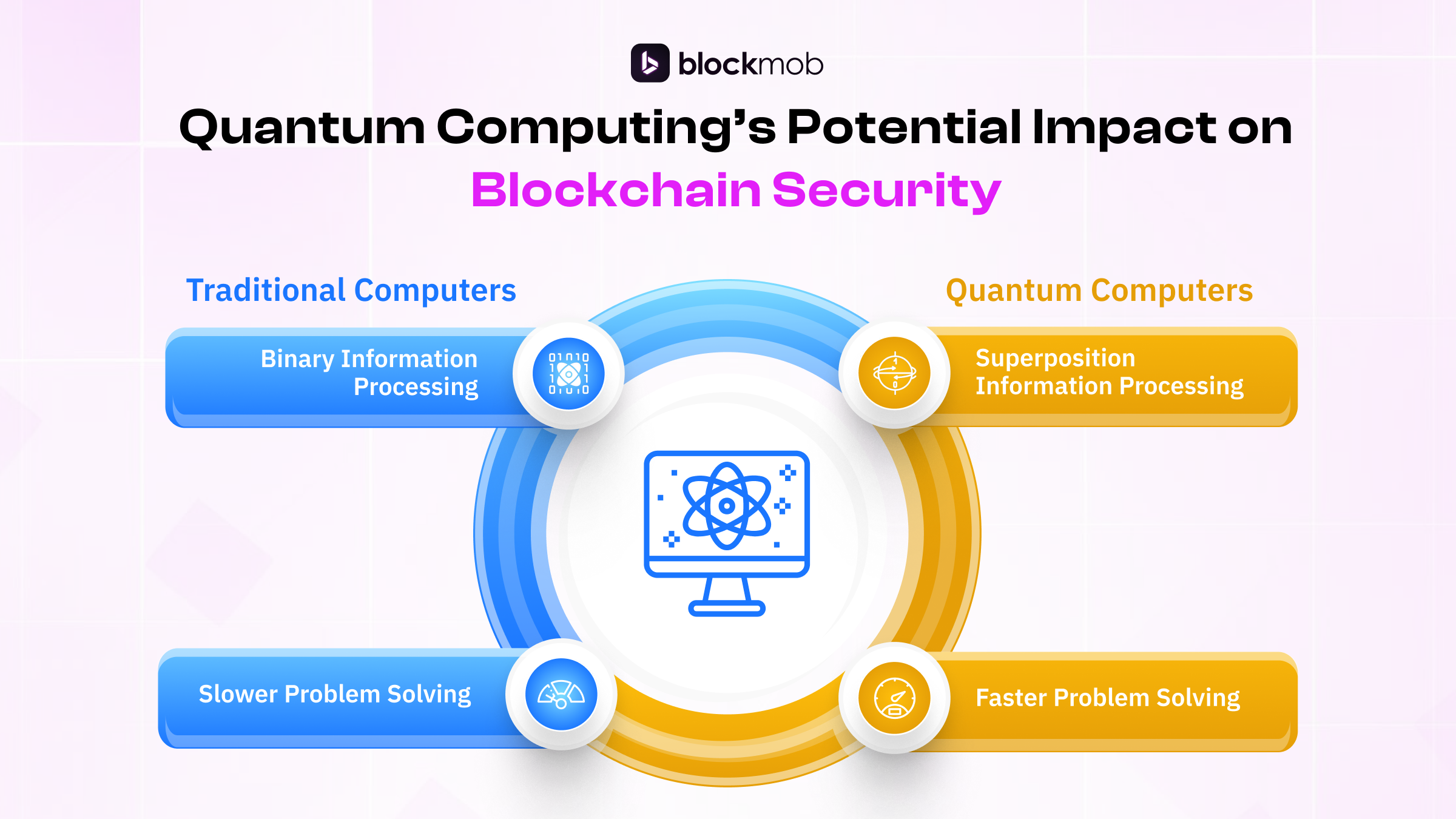
Traditional computers process information in bits that are either zero or one. Quantum computers use qubits, which can represent multiple states at the same time. This allows them to solve certain types of mathematical problems much faster than classical machines.
The reason blockchain enters the discussion is cryptography. Blockchains rely on cryptographic techniques to secure wallets, sign transactions, and verify ownership. Some of these techniques are theoretically vulnerable to large-scale quantum computers.
That last part matters. The threat depends on scale, stability, and accessibility. None of these is mature today.
Which parts of blockchain are actually at risk
Blockchain security is not one single thing. Different parts rely on different math.
Wallet signatures
Most blockchains use public key cryptography to prove ownership. In simple terms, your private key signs transactions, and the network verifies them using your public key. A sufficiently powerful quantum computer could, in theory, derive a private key from a public one.
However, this only becomes dangerous once the public key is exposed on the chain, and only if quantum machines are powerful enough to do this quickly. Today, they are not.
Hash functions
Hashing is used for block creation, transaction integrity, and address generation. Quantum computers do not break hashing in the same way. They may reduce security margins slightly, but strong hash functions remain broadly safe even in a quantum future.
Smart contracts and logic
Smart contracts themselves are not “broken” by quantum computing. The risk comes from how they interact with wallets and signatures. The business logic, permissions, and rules still behave as written.
In short, wallet cryptography is the main long-term concern, not the entire blockchain stack.
Why is this not an immediate problem
There are three practical reasons quantum risk is not urgent today.
First, current quantum computers are extremely limited. They struggle with error rates, stability, and scaling. Breaking modern cryptography would require machines far beyond what exists or is publicly available.
Second, blockchains are not static. Cryptography can be upgraded. Just as the internet moved from weak encryption to stronger standards over time, blockchains can migrate to quantum-resistant signature schemes when the need becomes real.
Third, attacking blockchain is not as simple as “press a button.” Even with quantum capability, coordinating attacks across live networks with economic incentives, monitoring, and rapid response is far from trivial.
This is why no major blockchain has seen credible quantum-based attacks in the wild.
.png)
What should responsible Web3 teams do today?
Ignoring the topic completely is also a mistake. Founders building serious infrastructure should think in horizons, not headlines.
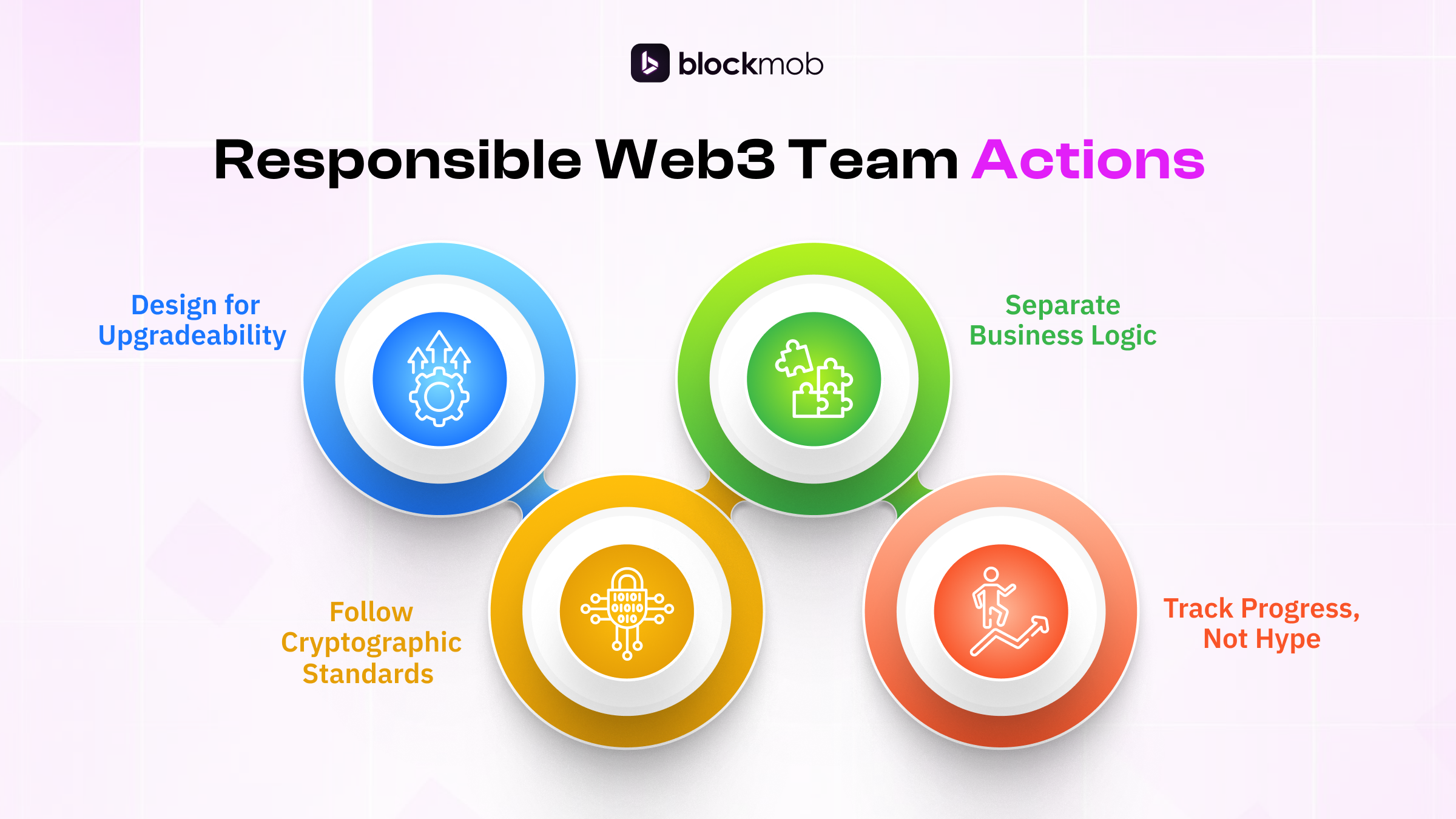
Design for upgradeability
Smart contracts and wallet systems should allow cryptographic upgrades without breaking user funds. This includes proxy patterns, governance controls, and migration paths. Products locked into rigid designs are risky even without quantum threats.
Follow cryptographic standards, not shortcuts
Using well-studied libraries and standards matters. Custom cryptography or experimental shortcuts increase long-term risk far more than quantum computing does.
Separate business logic from cryptography
When your product logic is cleanly separated from how signatures work, future upgrades become manageable. This is especially important for DeFi platforms, Web3 wallets, and long-lived dApps.
Track progress, not hype
Quantum computing progress is measurable. Serious teams follow actual research milestones, not social media predictions. This allows rational planning instead of fear-driven decisions.
A practical example
Imagine a DeFi platform built to operate for the next decade. If the team hard-codes signature assumptions everywhere, a future cryptographic upgrade becomes expensive and disruptive. If instead they design a modular wallet layer and upgradeable smart contracts, switching to quantum-resistant signatures later becomes an engineering project, not an existential crisis.
The difference is not quantum knowledge. It is a good system design.
Where Blockmob Labs fits into this conversation
At Blockmob Labs, we approach topics like quantum risk the same way we approach security, scalability, and compliance. We translate complex technical realities into practical product decisions that founders can understand.
When we build smart contracts, Web3 wallets, dApps, DeFi platforms, or full-stack Web3 products, we focus on longevity. That means clean architecture, upgrade paths, and avoiding design decisions that trap founders in the past.
Quantum computing is not a reason to delay building. It is a reason to build correctly.
Final takeaway
Quantum computing is a real long-term factor in cryptography, but it is not an immediate threat to blockchain or Web3 products today. The real risk for founders is poor design, rushed development, and treating infrastructure as a one-time build.
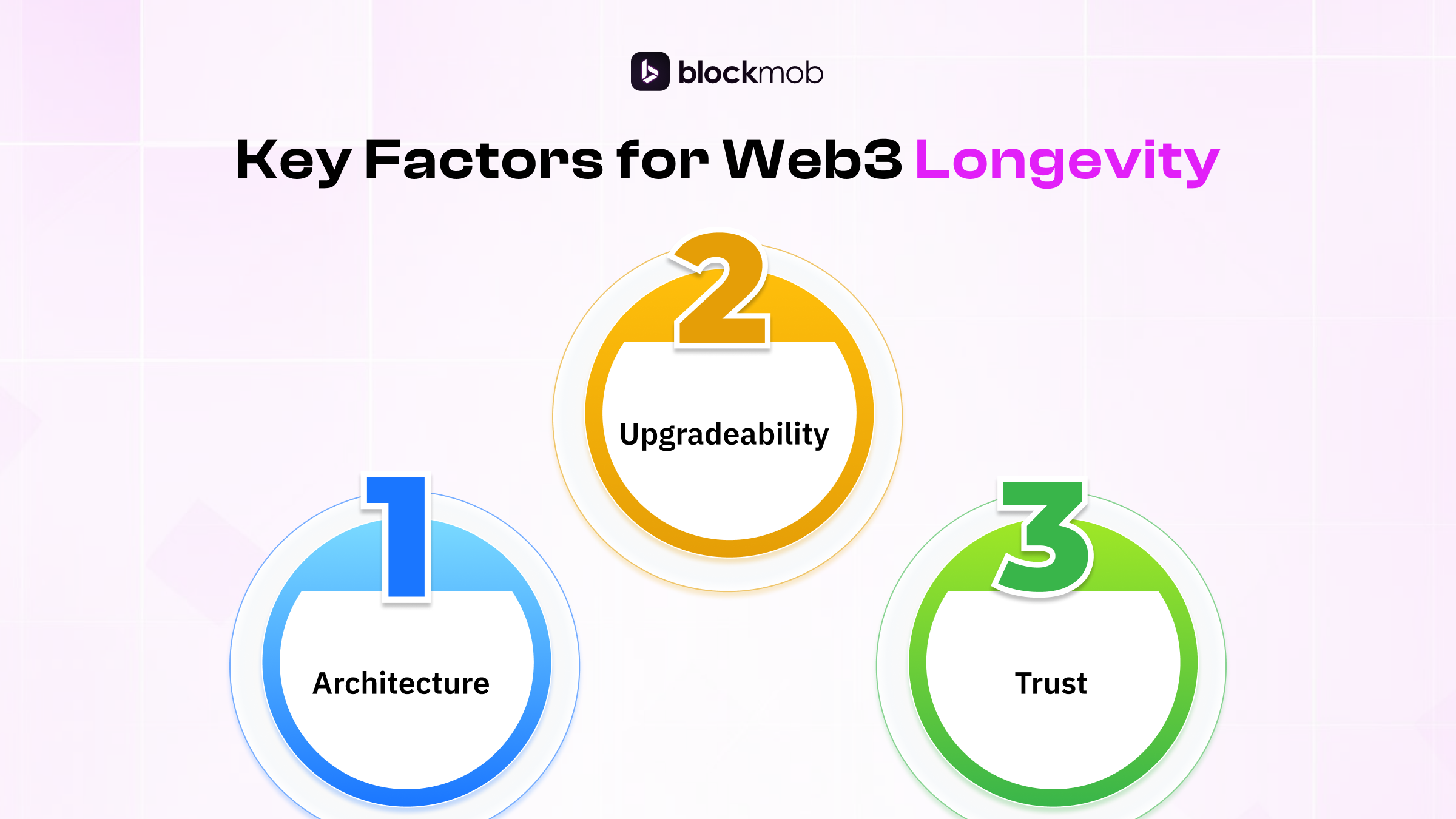
If you are planning a serious Web3 product and want it to remain secure, adaptable, and credible years from now, the conversation should not start with quantum panic. It should start with architecture, upgradeability, and trust.
If you want to explore how to design a Web3 system that is built for the future without overengineering for imaginary threats, Blockmob Labs is ready to have that conversation.


