


How AI and Quantum Computing Will Reshape Blockchain Systems

This blog explores how artificial intelligence and quantum computing are shaping the future of blockchain systems. It breaks down how these technologies improve security, scalability, and decision-making, while also preparing decentralised systems for long-term evolution and real-world adoption.
Blockchain was created to solve one big problem: trust.
It allowed people and businesses to exchange value without relying on a central authority. Over time, blockchain systems have grown into complex ecosystems powering finance, identity, supply chains, and digital ownership.
Now, two powerful technologies are advancing alongside blockchain.
Artificial intelligence and quantum computing.
On their own, each is transformative. Together with blockchain, they will reshape how decentralised systems are built, secured, and scaled.
This does not mean everything changes overnight. But it does mean the foundations of blockchain systems will evolve in important ways.
In this blog, we explain what artificial intelligence and quantum computing are in simple terms, how they interact with blockchain, and what this means for the future of decentralised systems.
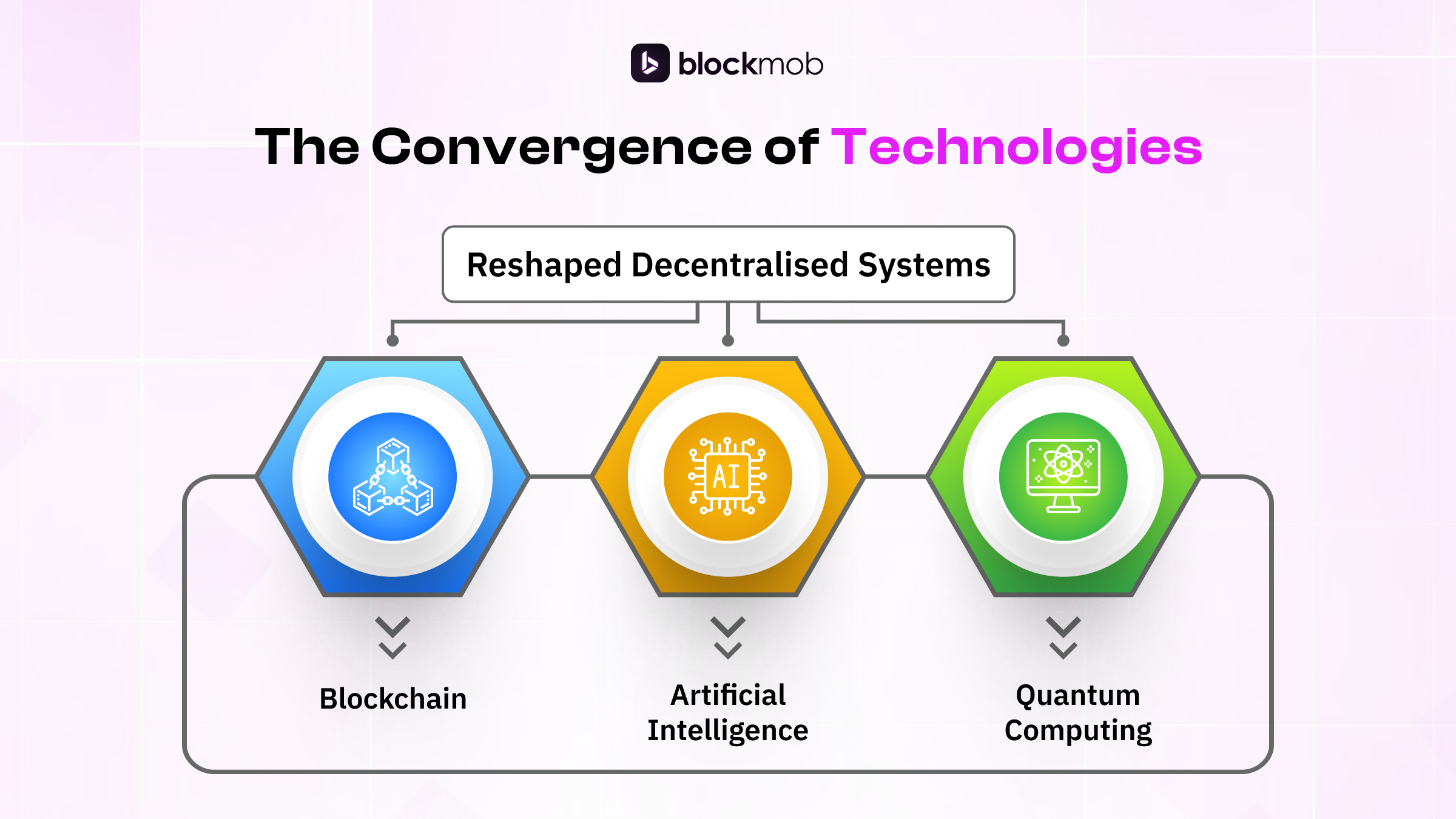
Understanding the Three Technologies in Simple Words
Before looking at the future, it helps to clarify what each technology does.
Blockchain is a shared digital ledger. It records transactions in a way that is transparent, tamper-resistant, and distributed across many participants.
Artificial intelligence focuses on learning from data. It finds patterns, makes predictions, and automates decisions at scale.
Quantum computing uses a completely different approach to computation. Instead of processing one possibility at a time, it can explore many possibilities simultaneously, solving certain problems much faster than traditional computers.
Each solves a different problem. When combined, they influence how blockchain systems operate, scale, and stay secure.
How Artificial Intelligence Is Already Influencing Blockchain
Artificial intelligence is already finding its way into blockchain systems, often quietly.
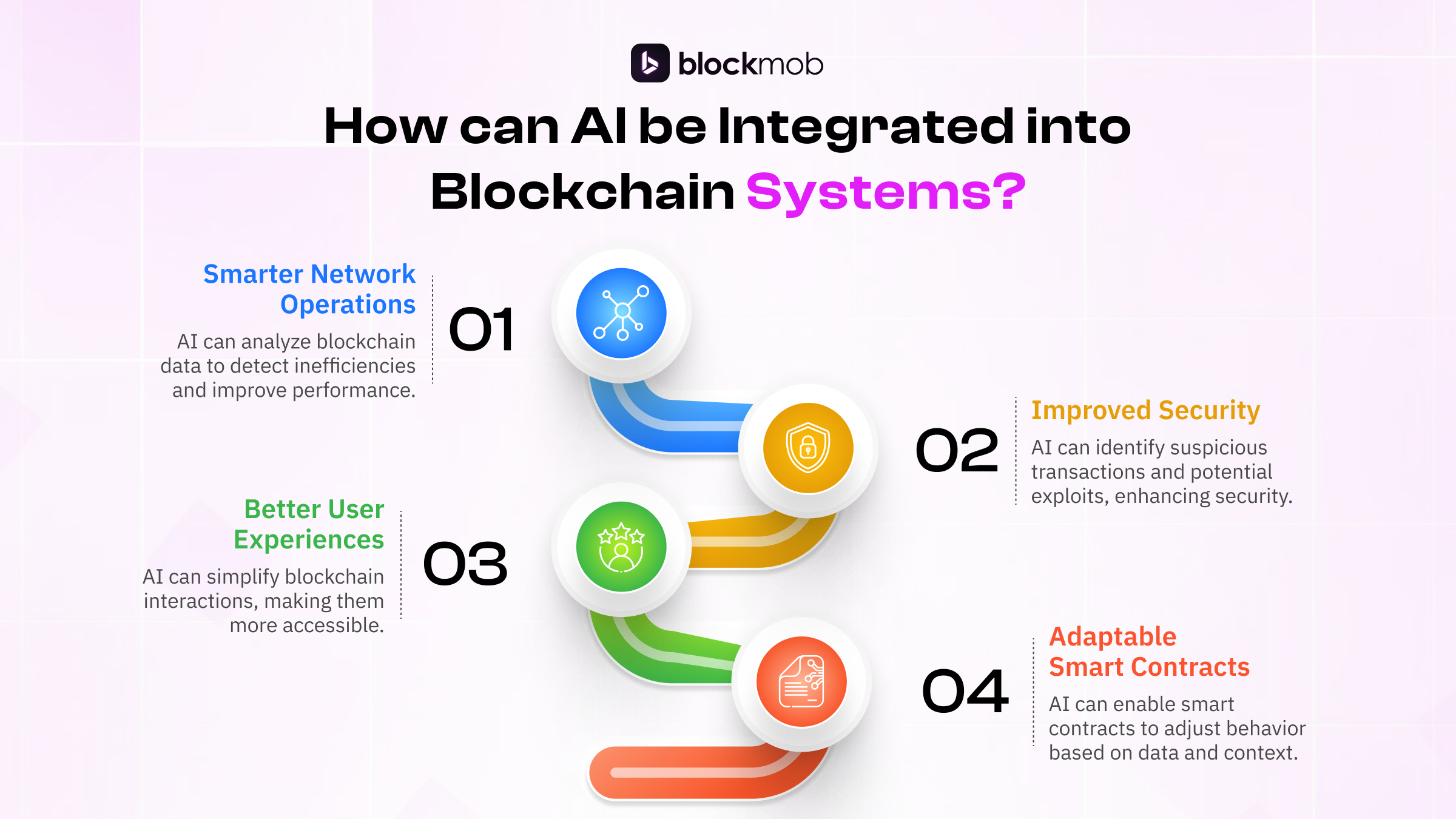
Smarter Network Operations
Blockchain networks produce massive amounts of data. Artificial intelligence can analyse this data to detect unusual behaviour, network congestion, or inefficiencies.
This helps improve performance and reliability without changing the core principles of decentralisation.
Improved Security and Fraud Detection
Artificial intelligence excels at spotting patterns that humans miss.
In blockchain systems, it can identify suspicious transactions, abnormal wallet behaviour, or early signs of exploits.
This shifts security from reactive to proactive, where threats are flagged before they cause damage.
Better User Experiences
Blockchain systems are often criticised for being difficult to use.
Artificial intelligence helps simplify this by:
Recommending actions
Automating routine tasks
Reducing errors
Guiding users through complex flows
As a result, blockchain applications become more accessible to non-technical users.
How Artificial Intelligence Changes the Role of Smart Contracts
Smart contracts are programs that run on the blockchain.
Today, most smart contracts follow fixed rules. They do exactly what they are coded to do.
Artificial intelligence introduces adaptability.
Instead of static logic, future smart contracts may adjust behaviour based on data, context, or risk levels. For example, they could change parameters dynamically based on market conditions or user behaviour.
This does not remove transparency. It adds intelligence on top of predictable rules.
What Quantum Computing Is and Why It Matters
Quantum computing often sounds mysterious, but the core idea is simple.
Traditional computers solve problems step by step. Quantum computers can explore many possible solutions at once.
This makes them extremely powerful for certain tasks, especially those involving large numbers, optimisation, and cryptography.
Blockchain relies heavily on cryptography. That is where the connection becomes important.
How Quantum Computing Challenges Current Blockchain Security
Most blockchain security today depends on mathematical problems that are extremely hard for traditional computers to solve.
Quantum computers, once mature enough, could solve some of these problems much faster.
This does not mean blockchains will suddenly break. Large-scale quantum computers capable of doing this reliably are still being developed.
But it does mean blockchain systems must prepare for a future where current cryptographic assumptions no longer hold.
The Shift Toward Quantum-Resistant Blockchains
In response, researchers and developers are already working on quantum-resistant cryptography.
These are encryption methods designed to remain secure even against quantum computers.
Future blockchain systems will gradually adopt these methods, just as encryption standards have evolved in the past.
This transition will likely happen quietly, through upgrades and protocol changes, rather than sudden disruption.
Where Artificial Intelligence and Quantum Computing Meet Blockchain
The most interesting changes happen where all three intersect.
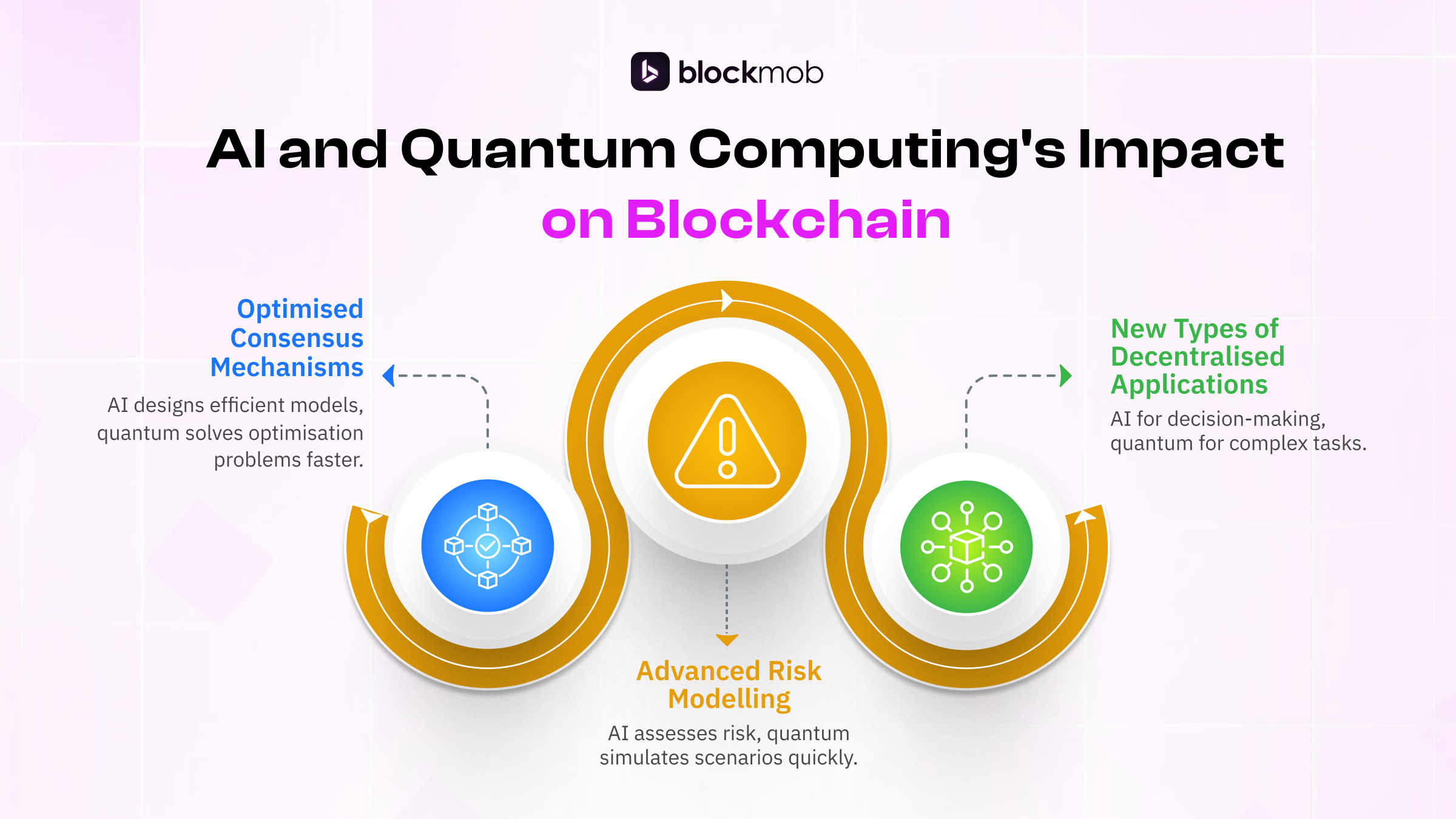
Optimised Consensus Mechanisms
Artificial intelligence can help design more efficient consensus models, while quantum computing can solve complex optimisation problems faster.
Together, they could enable blockchains that are faster, more energy efficient, and more scalable.
Advanced Risk Modelling
Artificial intelligence can assess risk in real time. Quantum computing can simulate vast scenarios quickly.
Combined, they allow blockchain systems to model economic behaviour, network stress, and attack scenarios with unprecedented depth.
This leads to more resilient systems by design.
New Types of Decentralised Applications
Future decentralised applications may rely on artificial intelligence for decision-making and quantum-enhanced computation for complex tasks.
Blockchain provides trust and auditability. Artificial intelligence provides intelligence. Quantum computing provides computational power.
This combination enables use cases that are currently impractical.
What This Means for Businesses Building on Blockchain
For businesses, this evolution has several implications.
Blockchain systems will become smarter, not just more secure.
Applications will adapt to users rather than forcing users to adapt to systems.
Security planning will look further ahead, accounting for long-term cryptographic changes.
Infrastructure choices made today should consider flexibility and upgrade paths rather than assuming permanence.
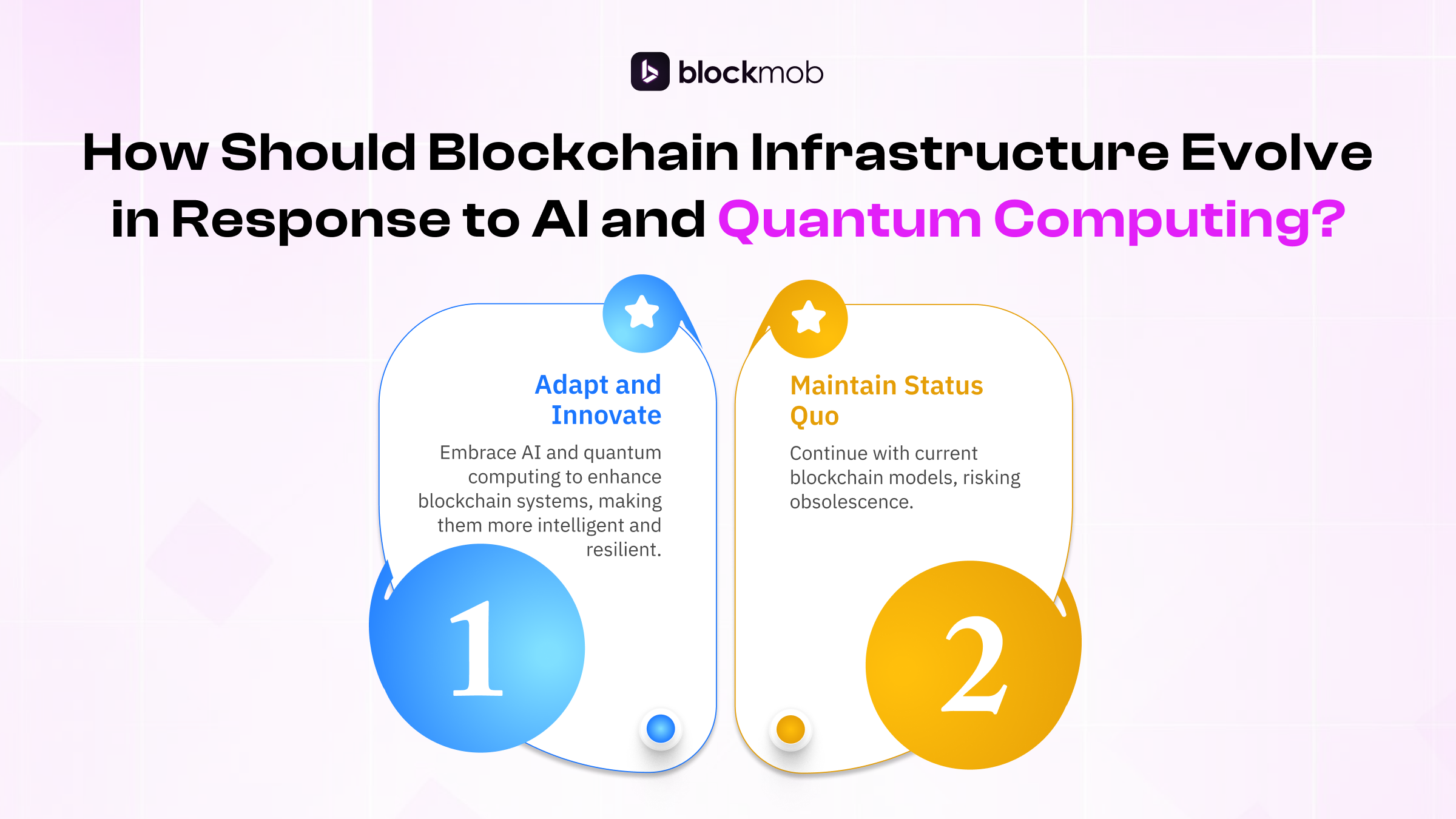
The key takeaway is not fear, but preparation.
Common Misconceptions About the Future
Some believe quantum computing will destroy blockchain.
Others believe artificial intelligence will centralise everything.
Both views oversimplify reality.
Blockchain has always evolved. Cryptography has always evolved. Security assumptions have always changed.
What matters is thoughtful design, gradual adaptation, and clear understanding.
The Direction We Are Heading
In the coming years, we will see:
More intelligent blockchain networks
Adaptive smart contracts
Quantum-resistant security standards
Better user experiences
Deeper integration between decentralised systems and advanced computation
This evolution will not replace blockchain’s core values. It will strengthen them.
Closing Thoughts
Artificial intelligence and quantum computing do not threaten blockchain.
They challenge it to grow.
They push decentralised systems to become more intelligent, more resilient, and more future-ready.
For teams building in Web3, understanding these shifts early helps guide better architectural decisions and long-term planning.
Blockchain is not standing still. Neither should the thinking around it.
A quiet note
Exploring how emerging technologies intersect often raises more questions than answers. That is normal.
Teams that take time to understand these shifts before reacting tend to build systems that last longer and adapt better.
Blockmob Labs spends a lot of time thinking about how blockchain infrastructure evolves alongside artificial intelligence and future computing models, especially where practical systems meet long-term resilience.


