


From Web2 to Web3: Migration Strategies for Businesses

Learn practical strategies for migrating from Web2 to Web3. Explore tokenisation, decentralised storage, payments, and smart contracts for businesses.
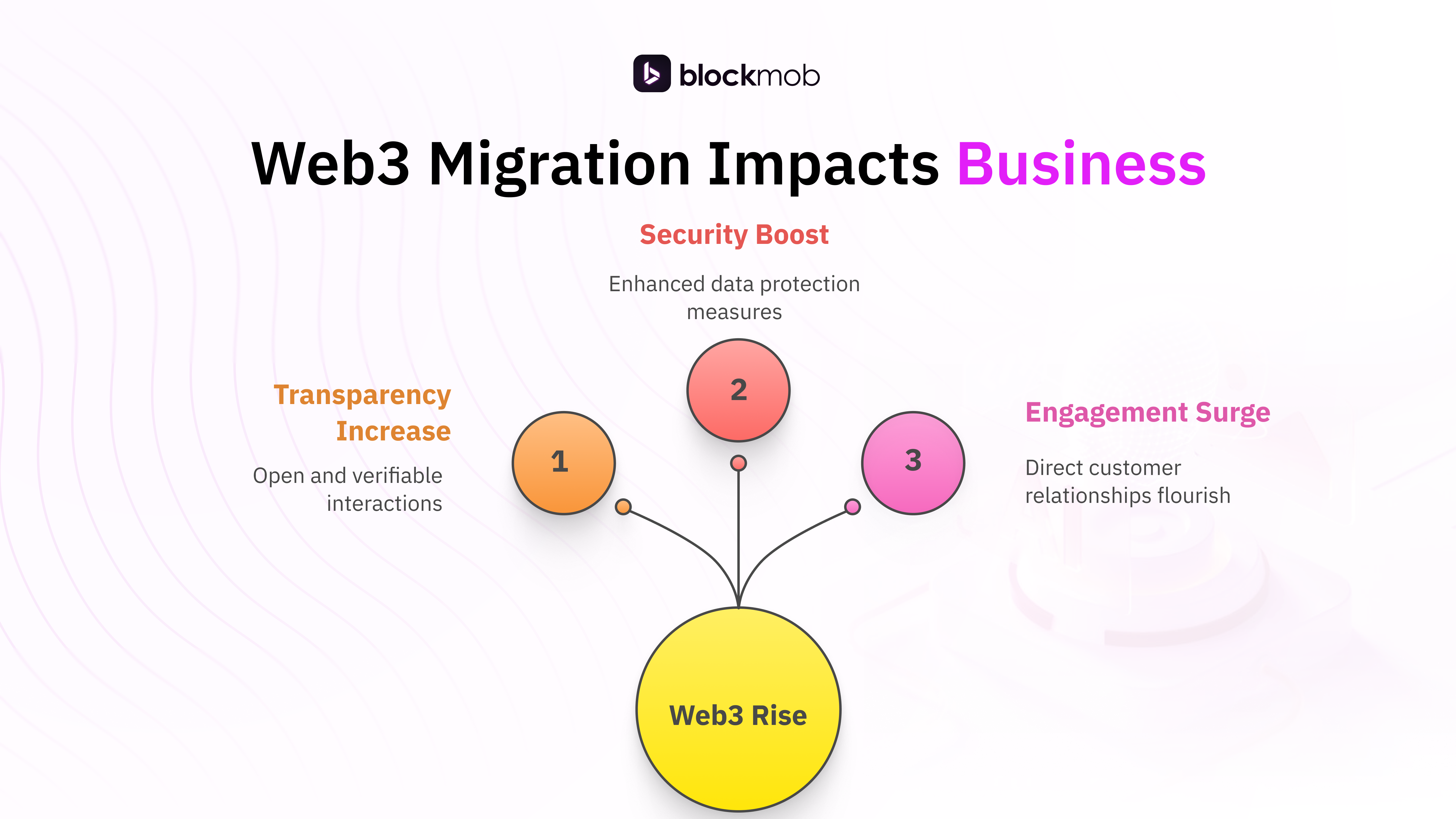
The digital economy is shifting rapidly. Businesses that once relied entirely on Web2 systems, centralised platforms, traditional databases, and closed ecosystems are now seeing the rise of Web3. This new era, powered by blockchain and decentralisation, promises more transparency, security, and direct engagement with customers.
For businesses, the challenge is not whether Web3 will matter, but how to transition effectively from Web2 to Web3.
Why Businesses Need to Think About Migration
Web 2.0 has served us well: social media for brand building, e-commerce platforms for sales, and cloud services for scalability. But it comes with limitations:
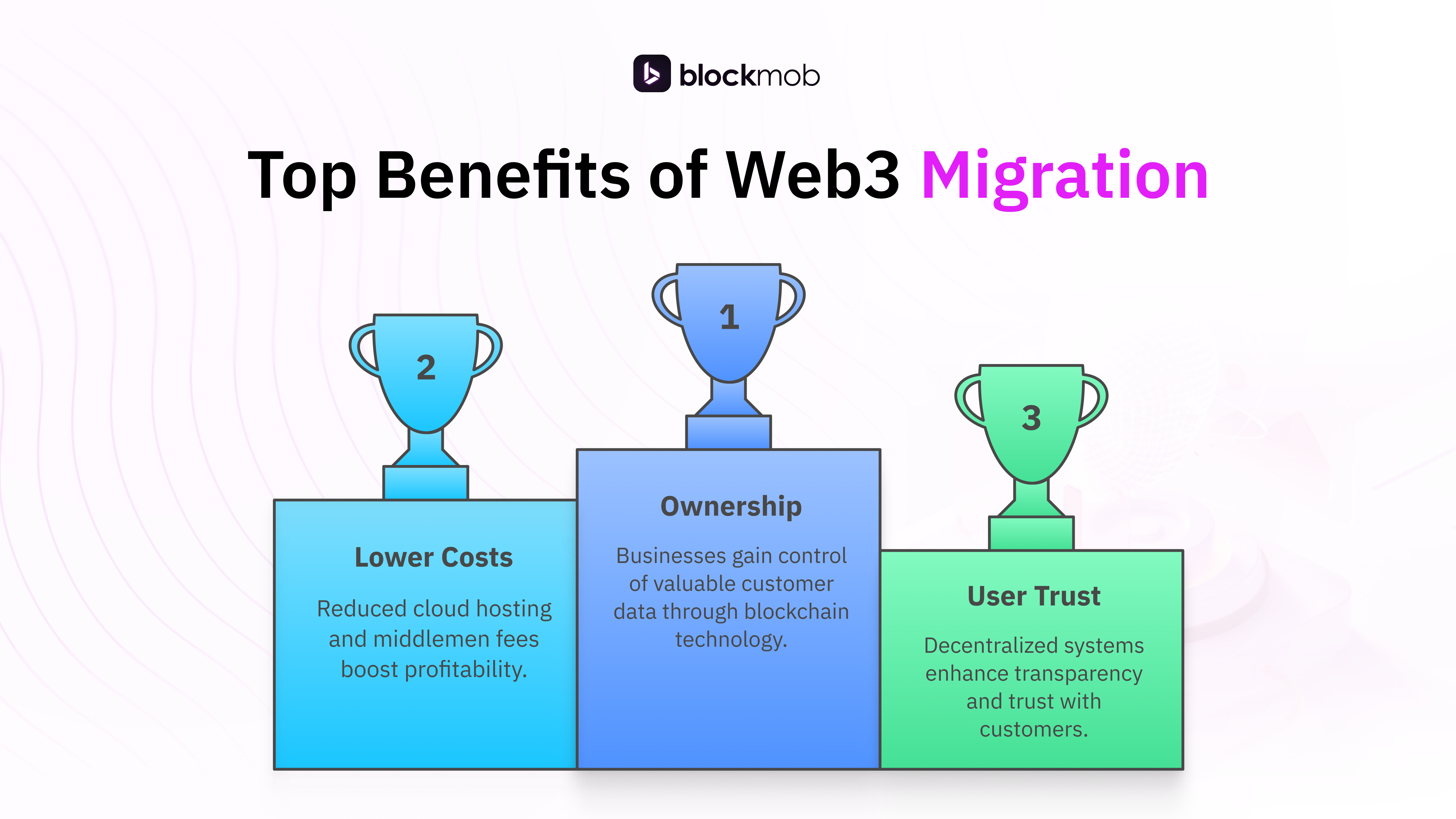
- Data Ownership – Companies often rely on third parties like Facebook or Google, which can result in the loss of control over valuable customer data.
- High Costs – Cloud hosting and middlemen fees cut into profits.
- Limited Trust – Centralised systems often face criticism for censorship, manipulation, and lack of transparency.
Web3 changes this by giving businesses ownership, lower costs, and user trust through blockchain, smart contracts, and decentralised infrastructure.
Step-by-Step Migration Strategies
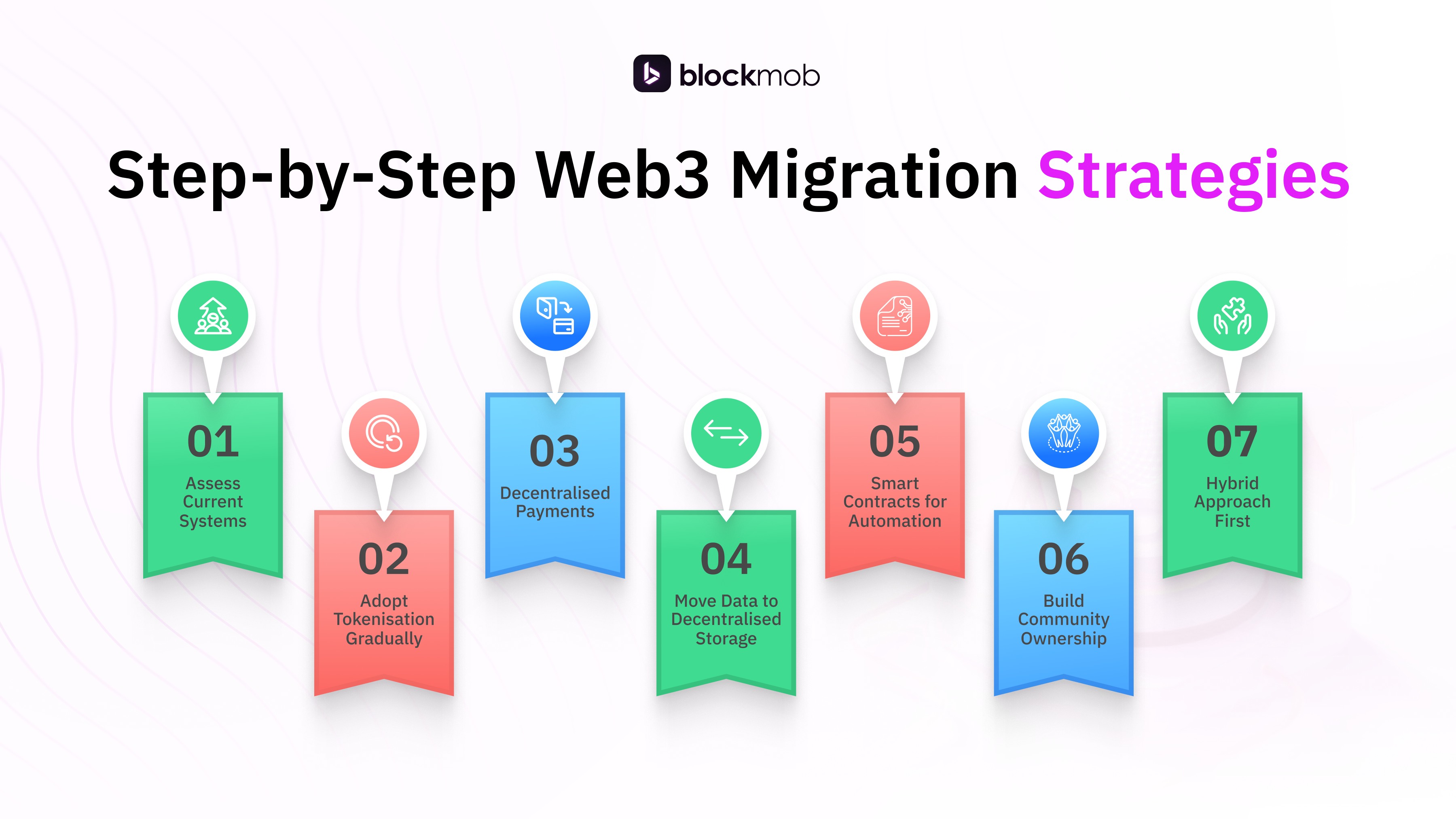
1. Assess Current Systems
Businesses should begin by analysing how they currently handle data, payments, and customer interaction. This assessment highlights which parts can be decentralised without disrupting daily operations.
2. Adopt Tokenisation Gradually
Instead of shifting entirely, companies can start by integrating loyalty tokens or NFTs for customers. For example, a coffee chain can replace punch cards with blockchain-based tokens that customers own.
3. Decentralised Payments
Integrating crypto wallets alongside traditional payments is often the first practical step. It adds flexibility without alienating existing users.
4. Move Data to Decentralised Storage
Switching from centralised cloud providers to decentralised storage networks (like IPFS or Arweave) ensures security, lower costs, and censorship resistance.
5. Smart Contracts for Automation
Businesses can automate tasks such as supply chain tracking, employee payouts, or customer refunds using blockchain-based contracts, reducing manual errors and reliance on middlemen.
6. Build Community Ownership
Unlike Web2, where platforms own the audience, Web3 allows businesses to create community-driven ecosystems. DAOs (Decentralised Autonomous Organisations) can be used for shared decision-making, giving customers and stakeholders a voice.
7. Hybrid Approach First
Full migration overnight is unrealistic. Businesses can operate hybrid models where Web2 remains for accessibility, while Web3 features add trust and engagement.
Key Challenges to Keep in Mind
- Regulation – Many regions are still unclear on crypto and token laws.
- User Education – Customers may not fully understand wallets, tokens, or DAOs.
- Integration Costs – Setting up smart contracts and decentralised systems requires expert guidance.
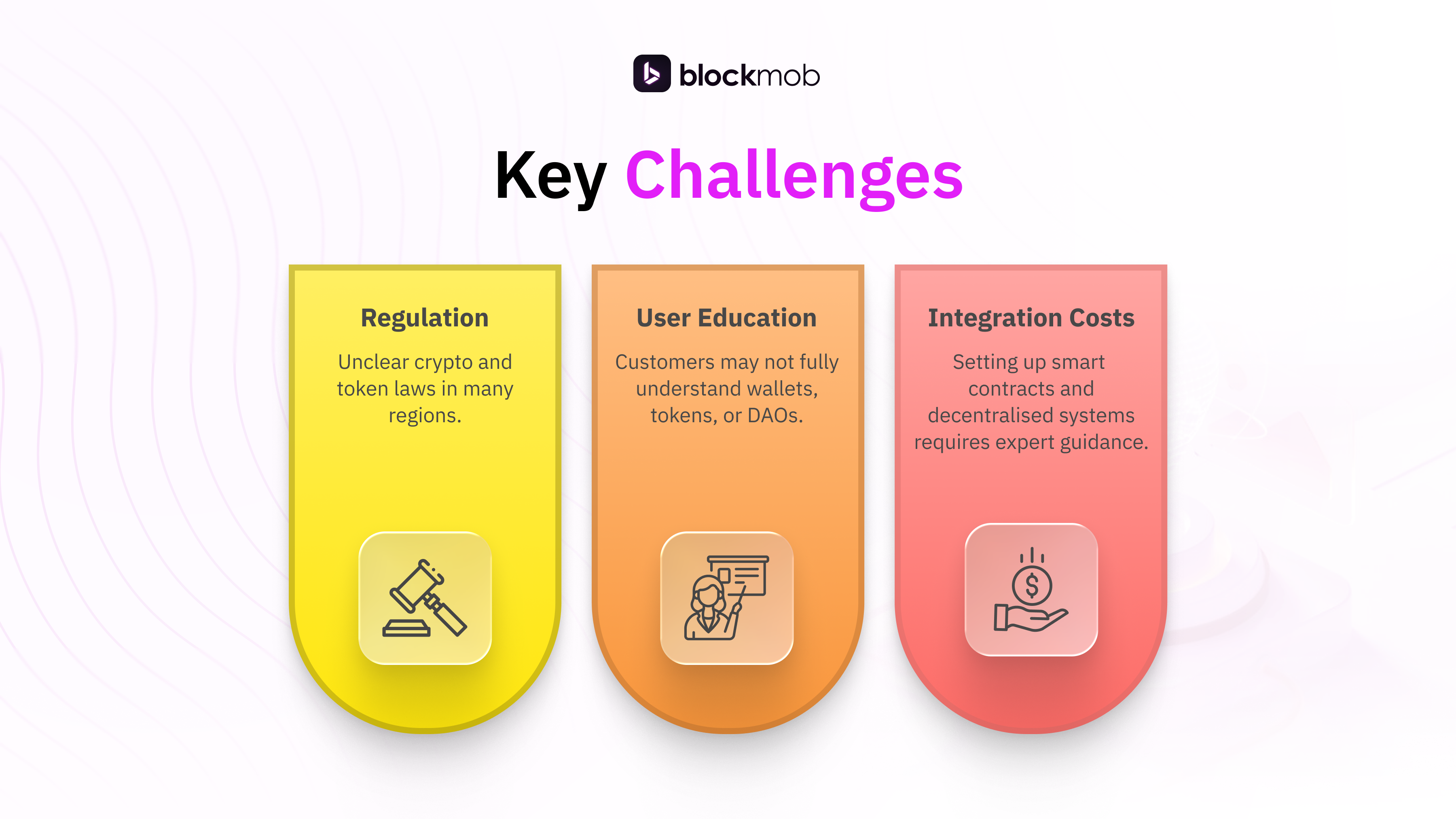
Overcoming these challenges requires careful planning and partnering with the right Web3 development teams.
The Road Ahead
Shifting from Web2 to Web3 isn’t just about upgrading technology; it’s about creating businesses that are transparent, community-driven, and ready for the future.
At Blockmob Labs, we build the tools that make this shift possible. Whether it’s smart contracts, decentralised storage, or token-powered platforms, we help you turn bold ideas into working products.
Curious about where Web3 can take your business? Let’s explore together at blockmob.io


