


Ethical AI in Blockchain | Responsible Innovation with Zero-Knowledge Proofs

Discover how Ethical AI and blockchain combine to build trust, fairness, and transparency. Learn how Zero-Knowledge Proofs (ZKPs) power responsible AI systems for the Web3 era.
Artificial Intelligence (AI) and blockchain are shaping the next decade of digital innovation. But as these two powerful technologies combine, one question keeps surfacing: can we trust what they create?
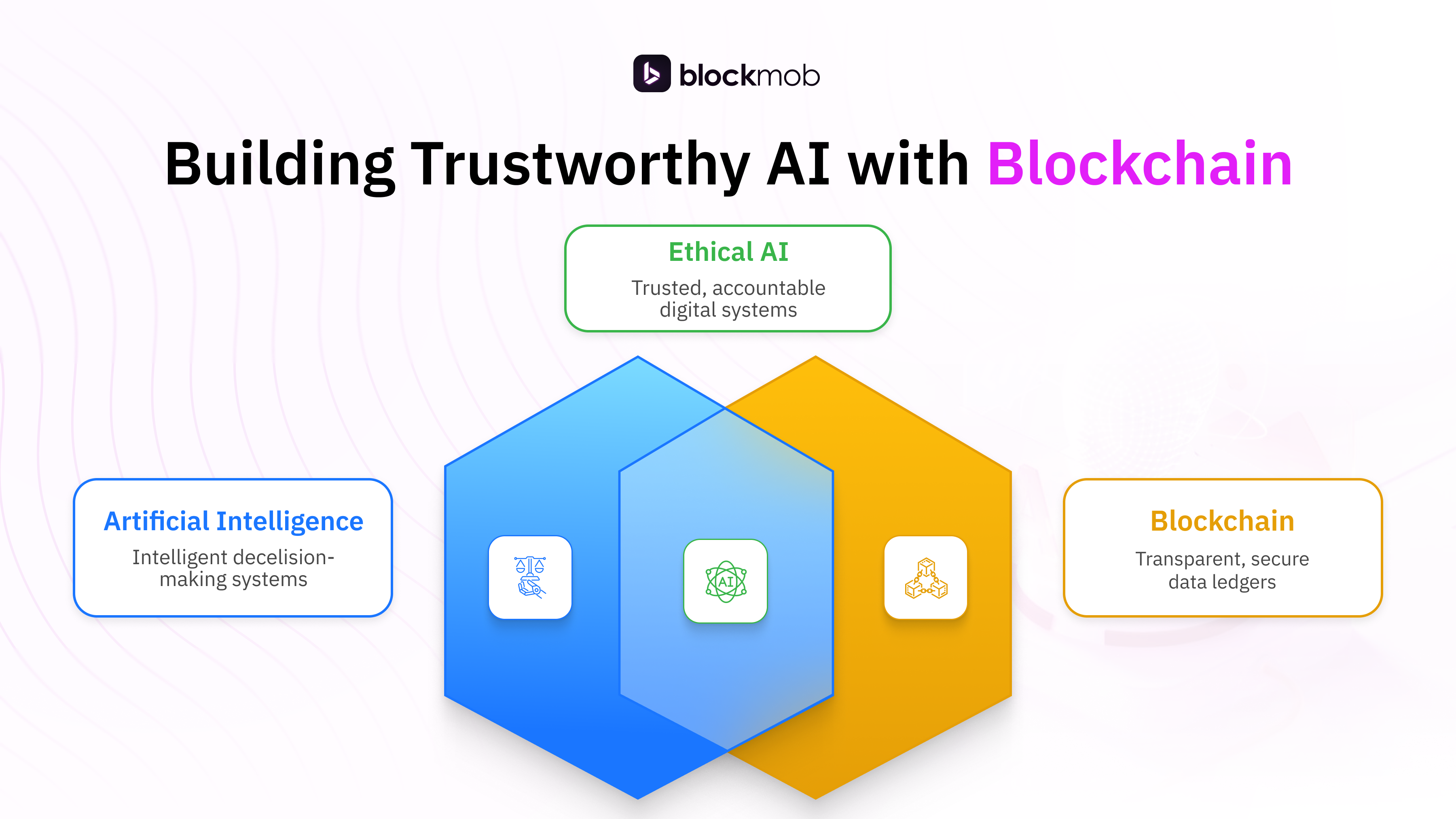
AI brings intelligence. Blockchain brings transparency. Together, they promise systems that are smarter and fairer. Yet, issues like bias, data privacy, and accountability still stand in the way.
That’s where Ethical AI steps in, and blockchain, supported by Zero-Knowledge Proofs (ZKPs), is becoming its strongest ally.
The Ethics Challenge in AI
AI systems today make countless decisions from approving loans to hiring employees. But often, these systems operate like black boxes. We don’t fully know how they make their choices.
This creates three key ethical problems:
- Bias: AI models can unintentionally favour one group over another.
- Privacy: AI systems rely on vast amounts of personal data.
- Accountability: When an AI makes a mistake, who’s responsible?
As AI grows in influence, these challenges can no longer be ignored. Especially for industries like finance, healthcare, and governance, where trust is non-negotiable.
How Blockchain Helps Solve Ethical Gaps
Blockchain adds what AI lacks: trust and traceability.
It creates an open, tamper-proof record of every action an AI system takes.
For example:
- When an AI model analyses financial data, the blockchain can log each decision transparently.
- If a loan gets rejected, the reason and logic can be verified later.
- Every update or training dataset can be timestamped and validated.
This transparency helps ensure decisions are fair, explainable, and verifiable.

Enter Zero-Knowledge Proofs (ZKPs)
But here’s the real breakthrough. Transparency shouldn’t mean losing privacy.
That’s where Zero-Knowledge Proofs (ZKPs) come in.
ZKPs are cryptographic techniques that let one party prove something is true without revealing the data itself.
Think of it like this:
You want to prove you’re above 18 without showing your ID. A ZKP lets you do exactly that, confirm the fact without sharing personal details.
In AI-blockchain systems, ZKPs make it possible to:
- Verify that an AI model followed ethical rules, without exposing sensitive data.
- Confirm compliance with regulations like GDPR.
- Ensure fairness checks were performed without leaking the actual dataset.
This balance between privacy and transparency is what makes ZKPs so powerful for Ethical AI.
Decentralised Compute: A New Way to Build Ethical AI
Most AI today runs on centralised servers controlled by a few tech giants.
But decentralised compute networks change that.
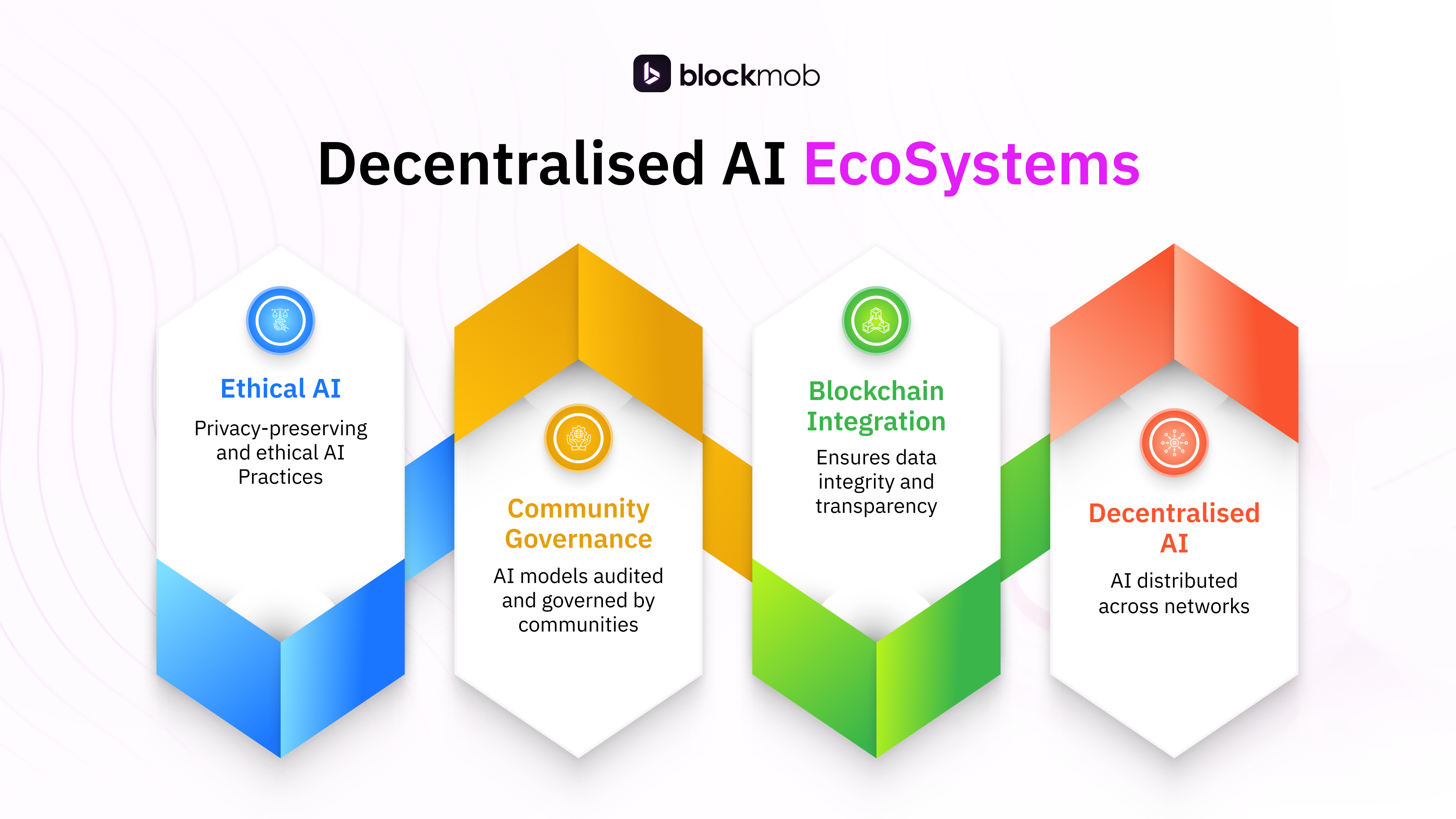
They distribute the training and running of AI models across many nodes worldwide, reducing single-point control.
Combined with blockchain, this ensures:
- No single entity owns all the data or power.
- AI models can be audited, governed, and verified by communities.
- Results become tamper-resistant and transparent.
This shift creates a new generation of decentralised, privacy-preserving, and ethical AI ecosystems.
A Real-World Example: Ethical AI in Sustainable Finance
Imagine a bank that uses AI to analyse green investments. The AI identifies companies that claim to follow eco-friendly standards.
Using blockchain and ZKPs:
- Each company’s sustainability data is verified on-chain without exposing confidential business details.
- The AI’s analysis process is logged transparently, so anyone can audit its reasoning.
- Investors can see which companies truly meet the ethical standards without needing to trust a central authority.
This model can extend far beyond finance to healthcare, supply chains, and public governance, wherever transparency and fairness matter.
Blockmob Labs’ Approach to Ethical AI Infrastructure
At Blockmob Labs, we focus on building the infrastructure layer that allows Ethical AI to thrive in Web3.
Here’s how we help enterprises and startups move toward responsible innovation:
- Privacy-first development: We design AI-integrated dApps using zero-knowledge frameworks.
- Decentralised compute architecture: Our engineers help deploy AI models on distributed networks to prevent data monopolies.
- Compliance by design: From smart contract rules to data pipelines, we embed governance that aligns with global privacy regulations.
- Security audits and testing: Every component undergoes review to ensure ethical integrity and transparency.
Our mission is simple: to help enterprises build trust into technology, not add it later.

The Road Ahead: Why Ethical AI Matters for 2025
By 2025, we’ll see more AI-blockchain hybrids across finance, logistics, and government systems. But those who earn trust will lead the market.
Enterprises that build with ethics, transparency, and privacy in mind will gain:
- Stronger public trust.
- Easier compliance with global laws.
- Competitive advantage through transparent innovation.
The combination of AI, blockchain, and Zero-Knowledge Proofs offers a practical path forward, a way to make advanced systems both powerful and principled.
Final Thoughts
Technology without ethics loses its value.
As AI continues to expand into everyday decisions, responsible innovation becomes a moral and business necessity.
Blockchain and Zero-Knowledge Proofs don’t just make systems efficient; they make them accountable.
And that accountability is what will separate trusted innovators from the rest.
At Blockmob Labs, we help businesses bridge that gap by designing, developing, and deploying AI-ready blockchain systems that put privacy, fairness, and transparency at the core.
If your organisation is ready to lead in Ethical AI for Web3,
Blockmob Labs can help you build the infrastructure to do it securely, responsibly, and for the long run.


