


DePIN vs Traditional Infrastructure

Centralised infrastructure is costly and controlled by corporations. Learn how DePIN flips the model by letting communities build and earn from decentralised infrastructure.
Infrastructure runs the modern world. From internet networks to cloud storage and energy systems, our daily lives depend on it. Traditionally, this infrastructure has been built and controlled by big corporations. They invest billions into servers, towers, and power plants, then charge businesses and consumers to use them.
This centralised approach has worked for decades, but it has serious limitations: it’s expensive, slow to scale, and keeps profits in the hands of a few.
Now, a new model is emerging: Decentralised Physical Infrastructure Networks (DePIN). Instead of one company owning everything, communities build and run the infrastructure together, earning rewards for their contributions. The question is simple: which model is better for the future?
.png)
The Traditional Model: Centralised but Costly
In the traditional setup, ownership is concentrated. A few corporations control the infrastructure and the revenue.
- Amazon Web Services (AWS) dominates cloud hosting, but businesses pay heavy fees for storage and servers.
- Telecom giants like AT&T and Verizon own entire networks, locking users into expensive plans.
- Uber controls the platform for ride-hailing but takes a significant cut from drivers and passengers.
The upside of this model is reliability and scale. The downside is cost, slow expansion into new regions, and little financial benefit for the everyday user.
.png)
The DePIN Model: Shared and Rewarding
DePIN flips the script. Instead of waiting for a corporation to build infrastructure, individuals and communities contribute their own resources WiFi routers, storage drives, solar panels, and even cameras. Blockchain tracks these contributions, and participants earn tokens as rewards.
.png)
Examples already exist:
- Helium allows people to set up wireless hotspots, creating a global IoT network.
- Filecoin lets anyone rent out spare storage, forming a decentralised alternative to cloud providers.
- Hivemapper rewards drivers for capturing road data, building maps without relying on Google.
The power of DePIN lies in its speed and inclusivity. Networks grow wherever people are willing to participate, not just where corporations decide to invest.
Why DePIN Wins Over Traditional Infrastructure
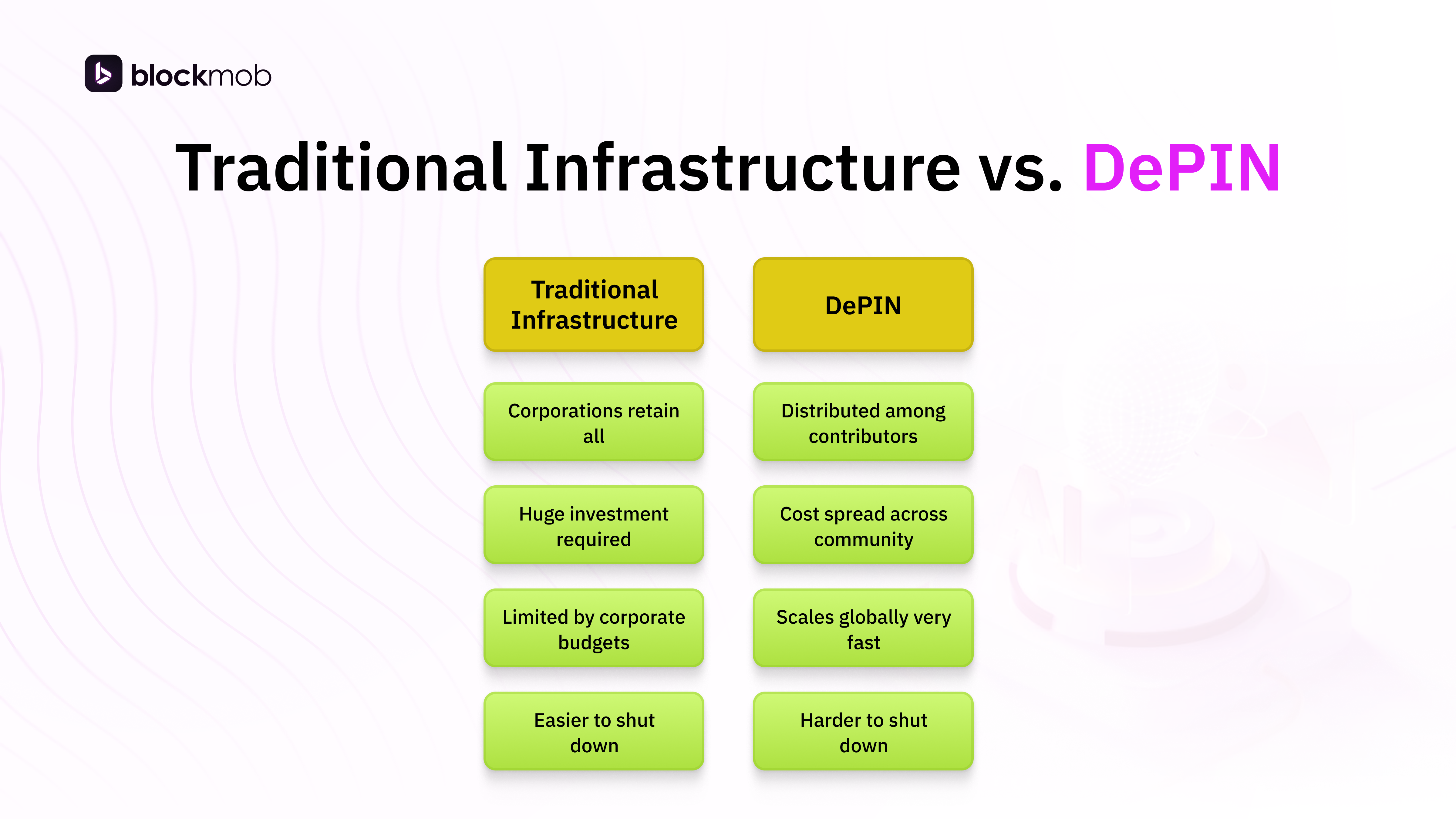
The differences are clear. In traditional infrastructure, ownership and profits stay with corporations. In DePIN, they are distributed among contributors. Traditional models demand huge upfront investment, while DePIN spreads the cost across the community.
Growth is another factor. Centralised networks expand as fast as corporate budgets allow, while DePIN can scale globally in a fraction of the time. And from a resilience perspective, decentralised networks are harder to shut down or control.
For businesses, this means lower costs, faster global reach, and more reliable systems. For users, it means fair rewards for contributing resources.
Why Businesses Should Pay Attention
DePIN is not just a blockchain trend; it’s a real opportunity for companies.
- Cost Savings: Businesses can access decentralised storage, connectivity, or computing at lower rates.
- Faster Expansion: Instead of waiting for infrastructure to be built, they can plug into networks that already exist worldwide.
- Sustainability: Many DePIN projects focus on greener, community-based energy and resource use.
- New Revenue Streams: Startups can build services on top of DePIN without massive upfront investment.
.png)
For a company deciding between expensive centralised systems and flexible decentralised ones, the choice is becoming clearer.
The Future Is DePIN
Cloud computing reshaped the last decade. DePIN is on track to reshape the next. The infrastructure of tomorrow will not be controlled by a handful of corporations but built by communities worldwide.
Businesses that adapt early will cut costs, access stronger networks, and unlock new revenue models. Those who hesitate risk being stuck with outdated, overpriced systems.
How Blockmob Labs Fits In
At Blockmob Labs, we help businesses build on this future. From smart contracts and tokenomics to dApps, wallets, and full-stack platforms, we provide the tools that bring DePIN projects to life.
Whether it’s a decentralised energy grid, an IoT network, or a new infrastructure-sharing platform, our team turns ideas into reality.
The shift from centralised control to community-powered infrastructure is already happening. If your business wants to lead, now is the time to act, and Blockmob Labs is here to help.


