


Chain Abstraction and Interoperability in Blockchain for Enterprises

Discover how chain abstraction and interoperability simplify blockchain adoption for enterprises. Learn how they enable cross-chain data, scalability, and flexibility.
Imagine a world where every app on your phone worked only with one brand of charger, one kind of Wi-Fi, or one payment method. Frustrating, right? That’s what today’s blockchain ecosystem often looks like. Different blockchains, Ethereum, Solana, Polygon, and Polkadot, each operate in silos. For businesses trying to adopt blockchain, this lack of interoperability creates friction, cost, and risk.
This is where chain abstraction and interoperability come in. They aim to hide the complexity of multiple blockchains and let businesses (and users) interact with them as if they were one smooth system.
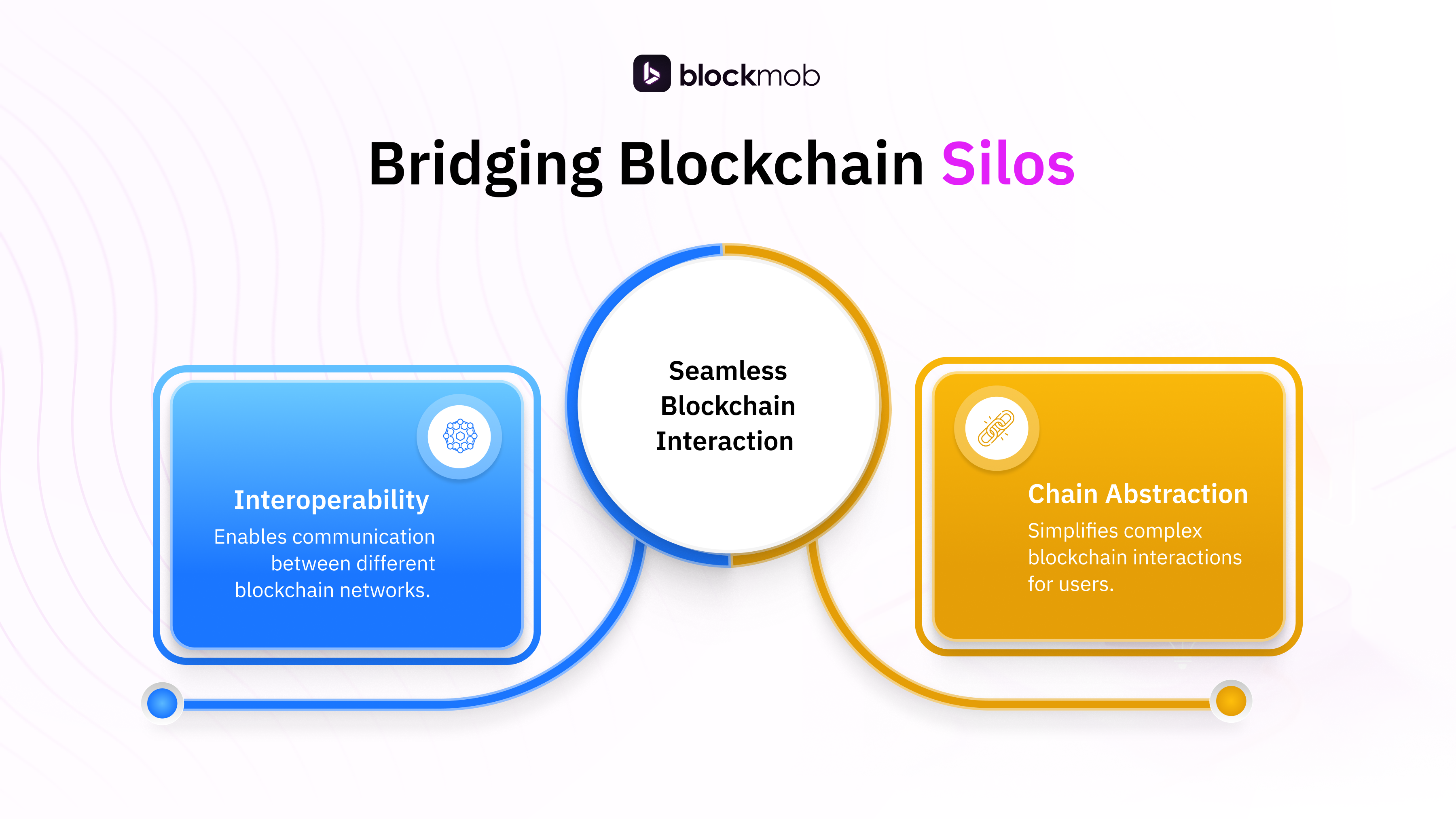
What is Interoperability?
At its core, interoperability means blockchains being able to “talk” to each other. Just like how emails can be sent between Gmail and Outlook, interoperability allows tokens, data, and contracts to move across different chains.

What is Chain Abstraction?
If interoperability is about blockchains communicating, chain abstraction is about hiding the messy details from the end user.
Think of it like online shopping. You don’t worry about how your bank talks to the merchant’s bank, or which protocols are used; you just tap “Pay.”
Chain abstraction does the same for blockchain:
- Users don’t need to know which chain they’re interacting with.
- Developers can build apps without forcing users to care about “Ethereum vs. Polygon.”
- Businesses can scale their blockchain solutions without confusing customers.
In short: chain abstraction = blockchain without the headache.

Why Enterprises Should Care
For enterprises, both interoperability and chain abstraction solve real pain points:
- Reduced Complexity
- No need to manage multiple wallets, tokens, or bridges.
- Customers can use your app without being “crypto experts.”
- Lower Costs
- Avoid being stuck with high gas fees on one chain.
- Route transactions to the most efficient network.
- Future-Proofing
- Blockchain is evolving fast. What’s popular today may not dominate tomorrow.
- Abstraction ensures your business isn’t tied to a single chain’s fate.
- Bigger Market Reach
- Tap into users across different ecosystems.
- Build apps that “just work,” no matter where the customer comes from.
Real-World Examples
- Cross-Chain DeFi: Liquidity pools that pull assets from Ethereum, Polygon, and Binance Smart Chain in one place.
- NFT Marketplaces: Users mint NFTs on one chain but trade them across multiple networks seamlessly.
- Supply Chain Platforms: A logistics company can track goods across chains (one chain for payments, another for verification).
These examples show how removing barriers between chains unlocks new business models.
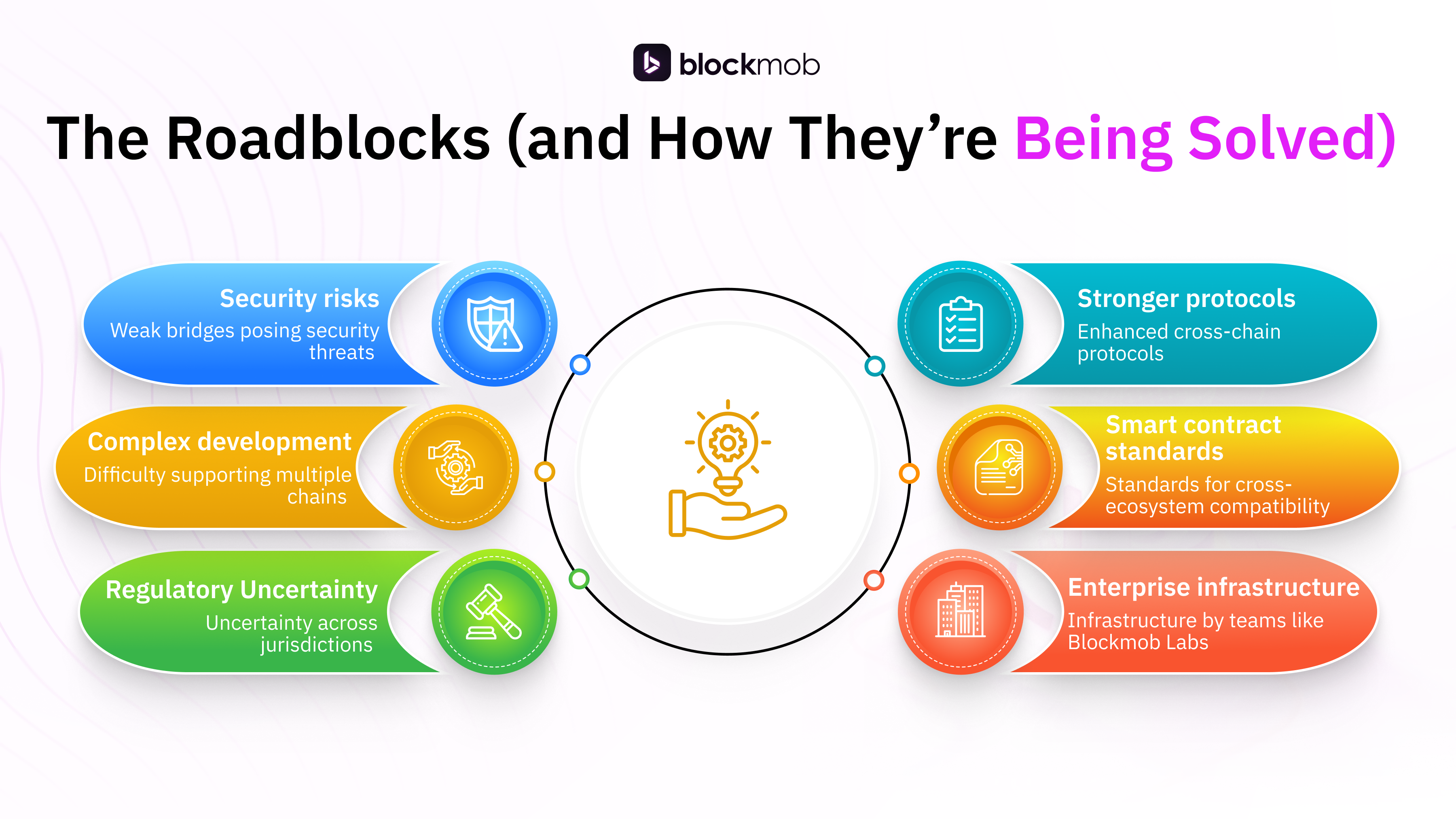
The Roadblocks (and How They’re Being Solved)
Of course, it’s not all smooth sailing. Enterprises still face:
But solutions are emerging:
The Future: One Internet of Blockchains
We’re moving toward an “Internet of Blockchains.” Just as the early internet connected isolated networks into a global web, chain abstraction and interoperability will connect today’s fragmented blockchain world.
For businesses, this means blockchain adoption will feel less like a technical gamble and more like a natural step forward. Customers won’t care which chain they’re using, only that it’s fast, secure, and cost-effective.
Final Takeaway
Enterprises that embrace chain abstraction and interoperability early will have a serious competitive edge. Instead of being limited by one chain’s ecosystem, they’ll operate across many, reaching more customers with less friction.
At Blockmob Labs, we help enterprises design and build the infrastructure behind interoperable and future-proof blockchain solutions.
Ready to explore cross-chain possibilities for your business? Let’s build it together.


