


Central Bank Digital Currencies (CBDCs) vs Cryptocurrencies: What’s the Difference?


Learn the key differences between Central Bank Digital Currencies (CBDCs) and cryptocurrencies. Discover how both will shape the future of money, finance, and blockchain adoption.
Imagine a world where you never carry cash, and all your money exists only on your phone or a digital wallet. You wake up, buy coffee by scanning your screen, and pay bills instantly without touching a single coin or banknote. Sounds convenient, right?
But here’s the question: who controls this money? Is it issued and tracked by your government, or is it managed by a decentralised network with no single authority? This is where the debate between Central Bank Digital Currencies (CBDCs) and cryptocurrencies begins.
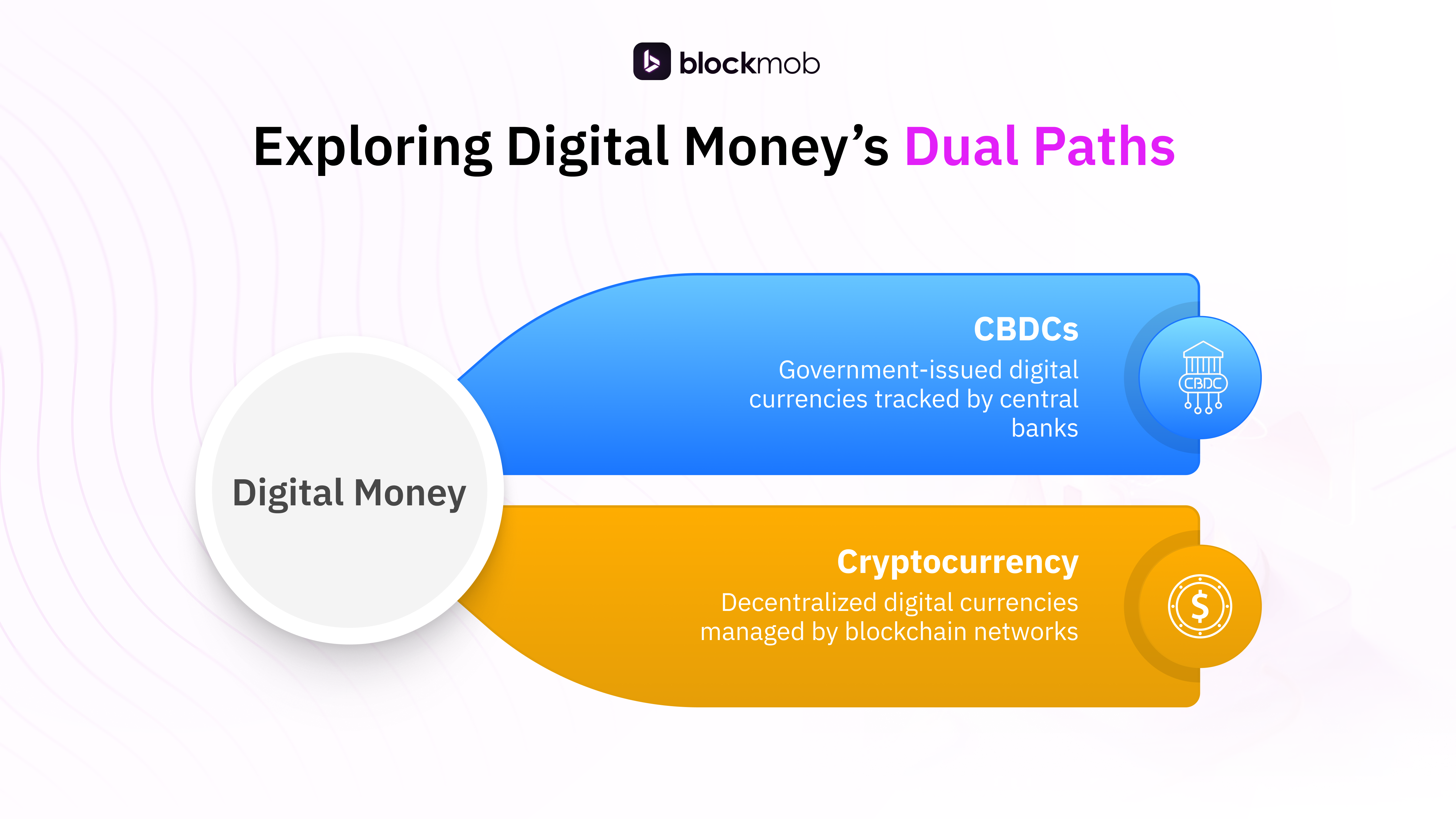
Both are forms of digital money, but they are built on very different foundations. Understanding these differences is important because the future of finance will be shaped by them.
What Exactly Are CBDCs?
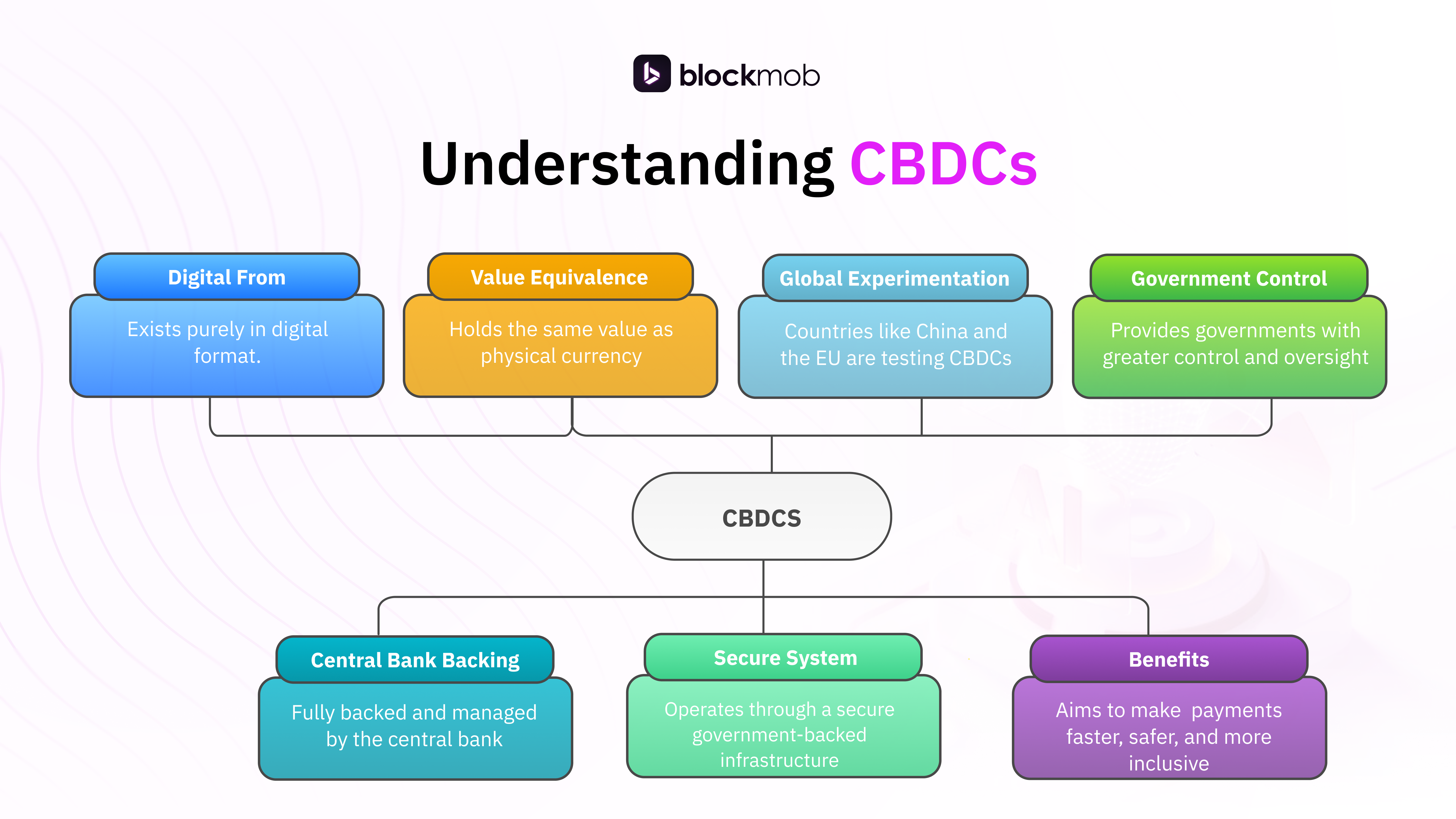
CBDCs are digital versions of a country’s official money, issued directly by the central bank. To make it simple, think of the cash you use today, rupees, dollars, or euros. Now imagine that instead of physical notes, this money exists purely in digital form, but still fully backed and controlled by the central bank.
For example, if you have 1,000 rupees in your CBDC wallet, it holds the same value as 1,000 rupees in cash. The difference is that you don’t need a physical banknote. Everything happens through a secure government-backed digital system.
Countries are experimenting with CBDCs already. China is leading with the digital yuan, while the European Union is working on the digital euro. Even the US Federal Reserve and the State Bank of Pakistan have been exploring possibilities.
CBDCs are designed to make payments faster, safer, and more inclusive, especially for people who don’t have access to traditional banking. But they also give governments greater control and oversight of financial transactions.
What Are Cryptocurrencies?
Cryptocurrencies, on the other hand, are completely different in spirit. They are digital currencies like Bitcoin or Ethereum, but no government issues them, and no central bank controls them. Instead, they run on blockchain technology, which is a decentralised network of computers spread across the world.
The beauty of cryptocurrencies is that they are borderless. You can send Bitcoin to someone in another country as easily as sending an email. There’s no bank or government in between, and no one can freeze or control your funds in the same way central banks can.
However, cryptocurrencies are not stable like CBDCs. Their value rises and falls depending on supply, demand, and market trends. For instance, Bitcoin could be worth $20,000 one month and $30,000 the next. That makes them exciting for investors but risky for everyday transactions.
The Fundamental Differences
At this point, you may wonder: if both CBDCs and cryptocurrencies are digital, why does it matter? The truth is, they may look similar on the surface, but their purpose, design, and control are completely different.
CBDCs are centralised. They are created, monitored, and controlled by governments. Every digital dollar or rupee in a CBDC system is backed by the central bank. This makes them stable and trustworthy for everyday use.
Cryptocurrencies are decentralised. They are created and managed by technology, not by a government. No single authority owns them. This gives people more financial independence, but also exposes them to price volatility and regulatory risks.
In simple terms:
CBDCs are like a digital form of the money you already use, fully under government authority.
Cryptocurrencies are like an alternative money system, outside government control, built on blockchain innovation.
Pros and Cons of CBDCs
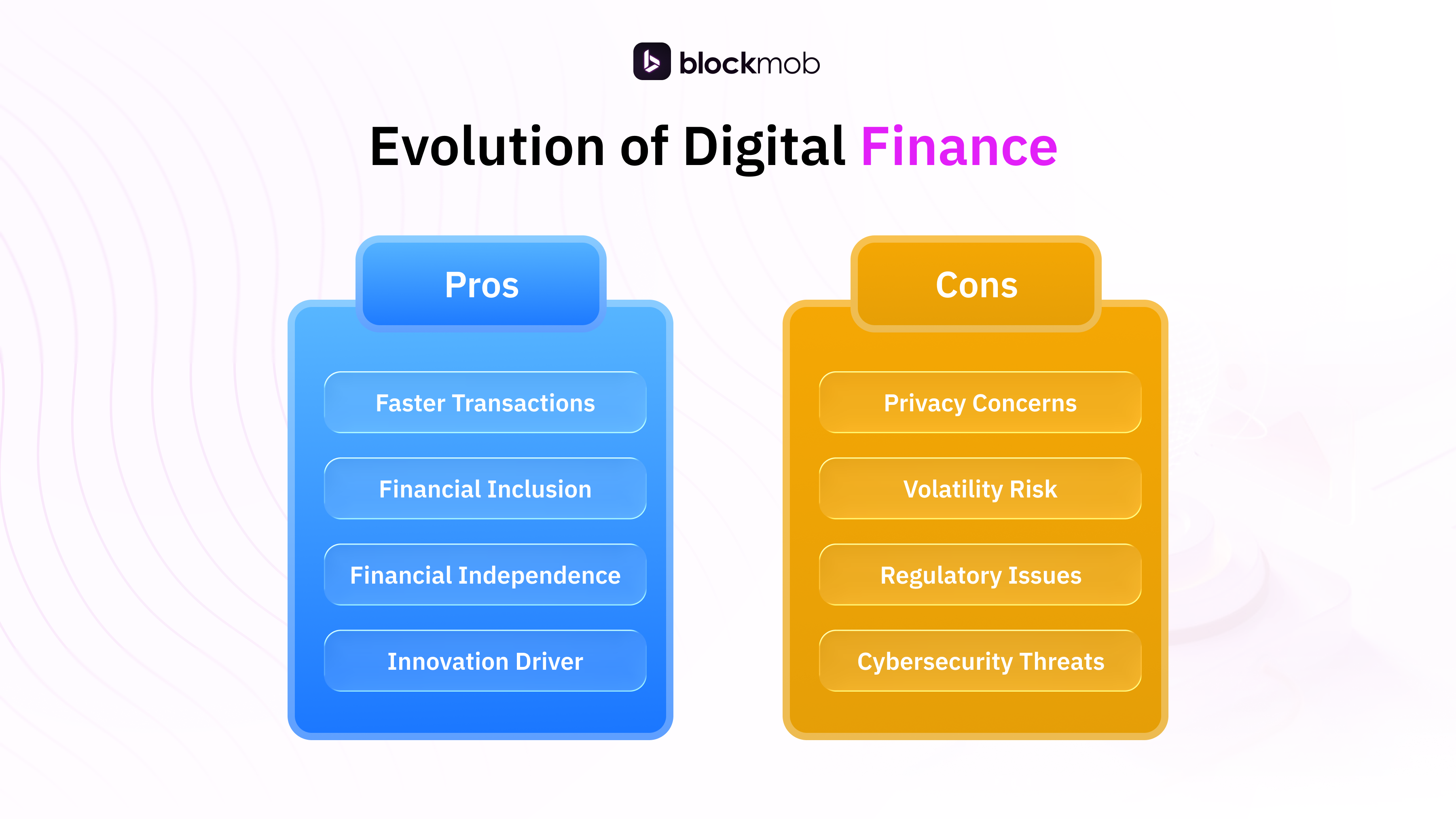
CBDCs can make payments faster and cheaper, especially across borders. Imagine sending money from Pakistan to the US without waiting days or paying heavy bank fees. A CBDC system could make it instant.
They also improve financial inclusion. Millions of people around the world don’t have bank accounts but own smartphones. With a CBDC wallet, they could store money securely and make payments with ease.
But CBDCs also come with concerns. Since they are government-controlled, there is less privacy. Every transaction could, in theory, be monitored. This raises questions about surveillance and financial freedom.
Pros and Cons of Cryptocurrencies
Cryptocurrencies give people financial independence. No government can shut down Bitcoin or control who uses it. This makes it attractive for those living in unstable economies or countries with strict financial controls.
They also open the door to innovation. Cryptocurrencies are the backbone of decentralised finance (DeFi), NFTs, and new digital business models.
However, the downside is volatility. Unlike CBDCs, cryptocurrencies are not tied to a stable national currency. Their value can swing wildly, making them less reliable for everyday spending. Moreover, because they operate outside government regulation, they are sometimes linked to scams or illegal activities, which adds another layer of risk.
Real-World Impact
CBDCs and cryptocurrencies are not enemies; they are simply designed for different purposes. Governments want CBDCs to improve the efficiency of their financial systems and maintain control. Cryptocurrencies, on the other hand, were created to challenge that control and offer freedom to individuals.
It’s possible that in the future, both will coexist. For example, you may receive your salary in CBDCs for stability, but invest in cryptocurrencies for potential growth and innovation.
We are already seeing hybrid approaches. Some countries are studying how blockchain, the technology behind cryptocurrencies, can be used to power CBDCs. Meanwhile, crypto adoption continues to rise globally despite regulatory challenges.
Conclusion
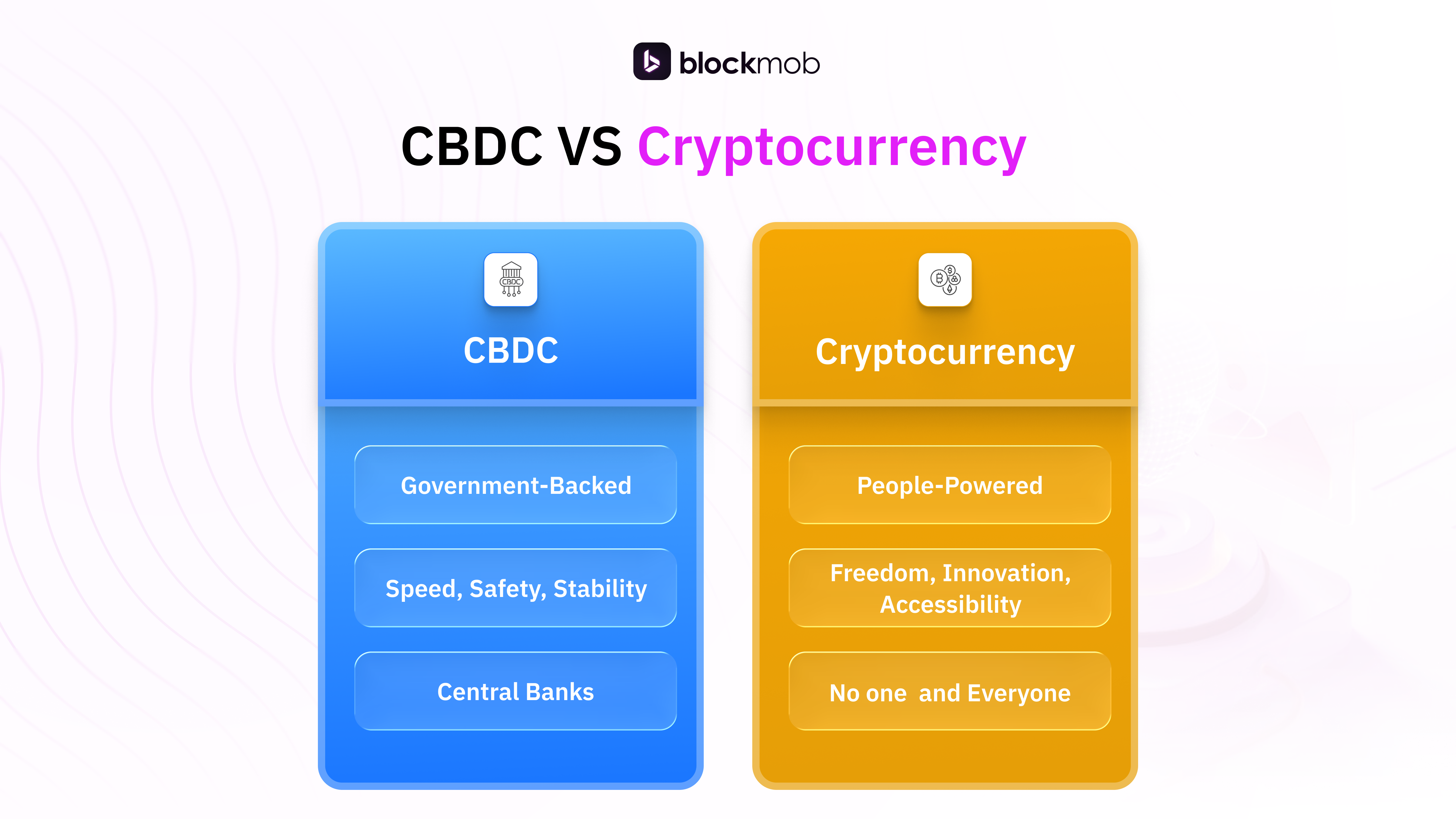
The world of money is changing before our eyes. Central Bank Digital Currencies represent a government-backed step into the digital age of finance, offering speed, safety, and stability. Cryptocurrencies represent a people-powered alternative, offering freedom, innovation, and global accessibility.
The key difference is control. CBDCs are controlled by central banks, while cryptocurrencies are controlled by no one and everyone at the same time.
Both will play an important role in shaping the future of money. As individuals, businesses, and investors, the best approach is not to choose one over the other, but to understand both and see how they can fit into the financial systems of tomorrow.
The future of money is closer than we think. Want to stay ahead of these changes? At BlockMob Labs, we break down complex blockchain trends into clear insights. If you’re exploring how CBDCs, cryptocurrencies, or digital assets can impact your business, our team is here to help.


