


Blockchain in the Telecom Market: Solving Data, Security, and Trust Challenges

Discover how blockchain is transforming the telecom industry by solving challenges in data privacy, SIM fraud, billing disputes, and roaming settlements.
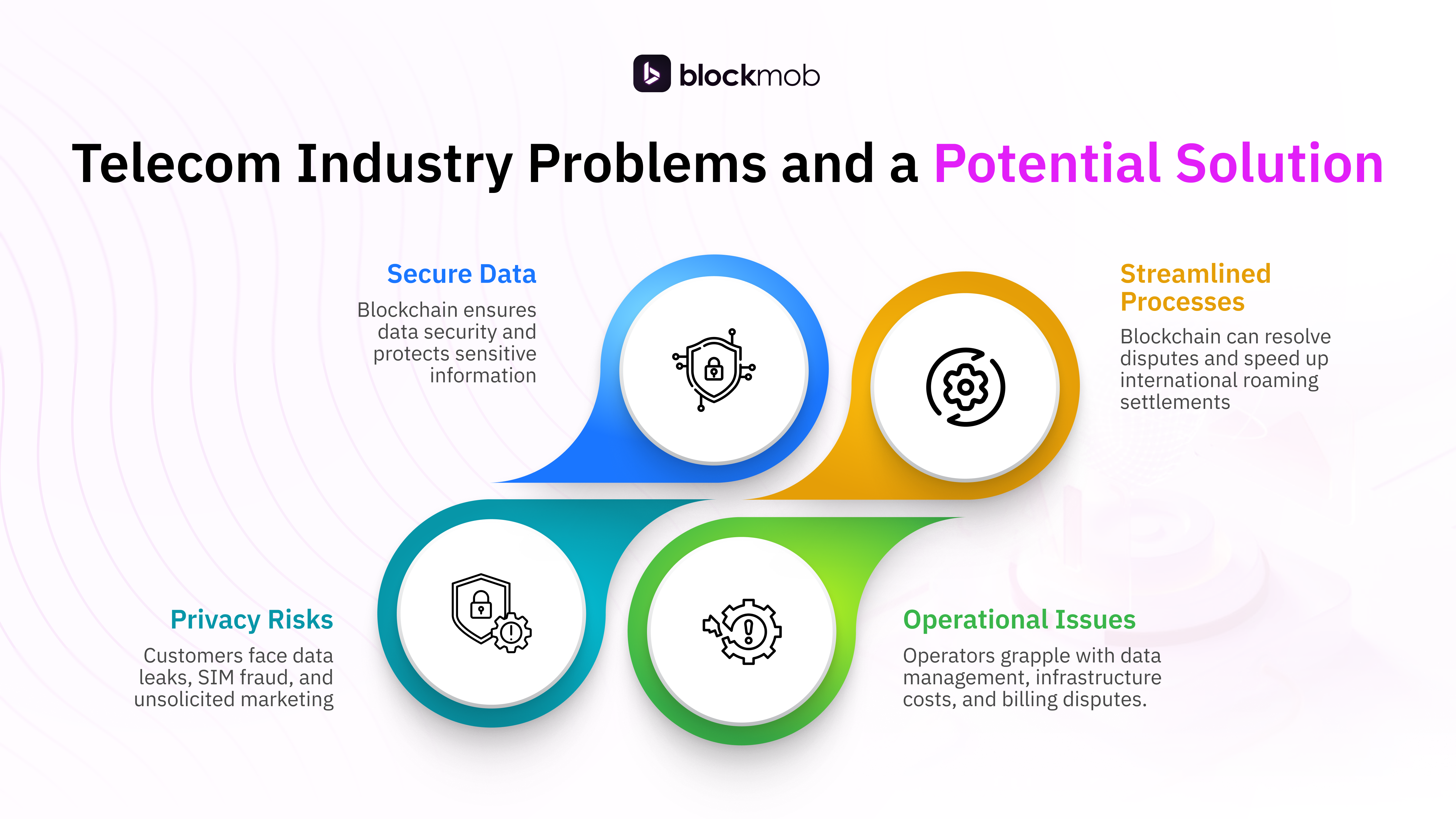
When you buy a SIM card from a telecom provider, you hand over your most sensitive information: CNIC, phone number, address, and even biometric data. Telecom companies promise to keep this information safe, but in reality, users face constant risks. From data leaks to SIM fraud and unsolicited marketing, trust is often broken.
On the other side, telecom operators themselves struggle with massive amounts of data, high infrastructure costs, billing disputes, and international roaming settlements that take weeks to finalise. Both the customer and the company face pain points that the current system cannot fully resolve.
This is where blockchain is emerging as a real game-changer.
Pain Points in Today’s Telecom Industry
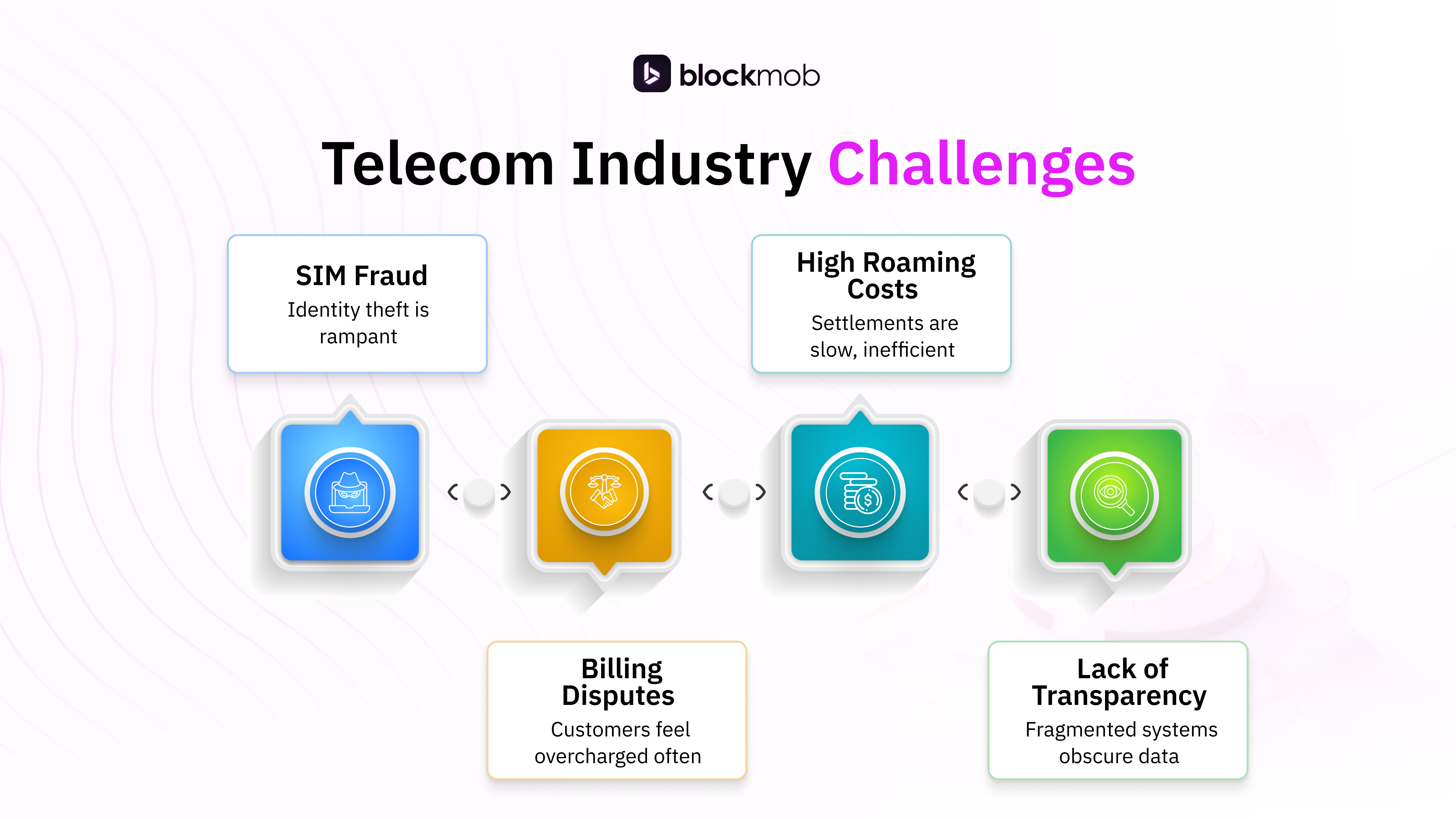
1. User Data Privacy
Telecoms collect vast amounts of personal data. In many regions, users have little control over how this data is stored or shared. Data leaks and unauthorised selling of information remain common.
2. SIM Fraud and Identity Theft
Fake identities and SIM duplication create serious security concerns. Criminals exploit weak verification systems, putting ordinary users at risk.
3. Billing Disputes
From hidden charges to errors in roaming bills, customers often feel overcharged. For telecoms, reconciling billing data across different operators and regions is expensive and slow.
4. High Costs of Roaming and Settlements
Cross-border telecom settlements involve multiple intermediaries. Payments between operators may take weeks or months, creating inefficiency.
5. Lack of Transparency
Users rarely know how their data is being used. Meanwhile, telecoms themselves struggle with fragmented systems that make it difficult to track everything in real time.
How Blockchain Can Solve These Challenges
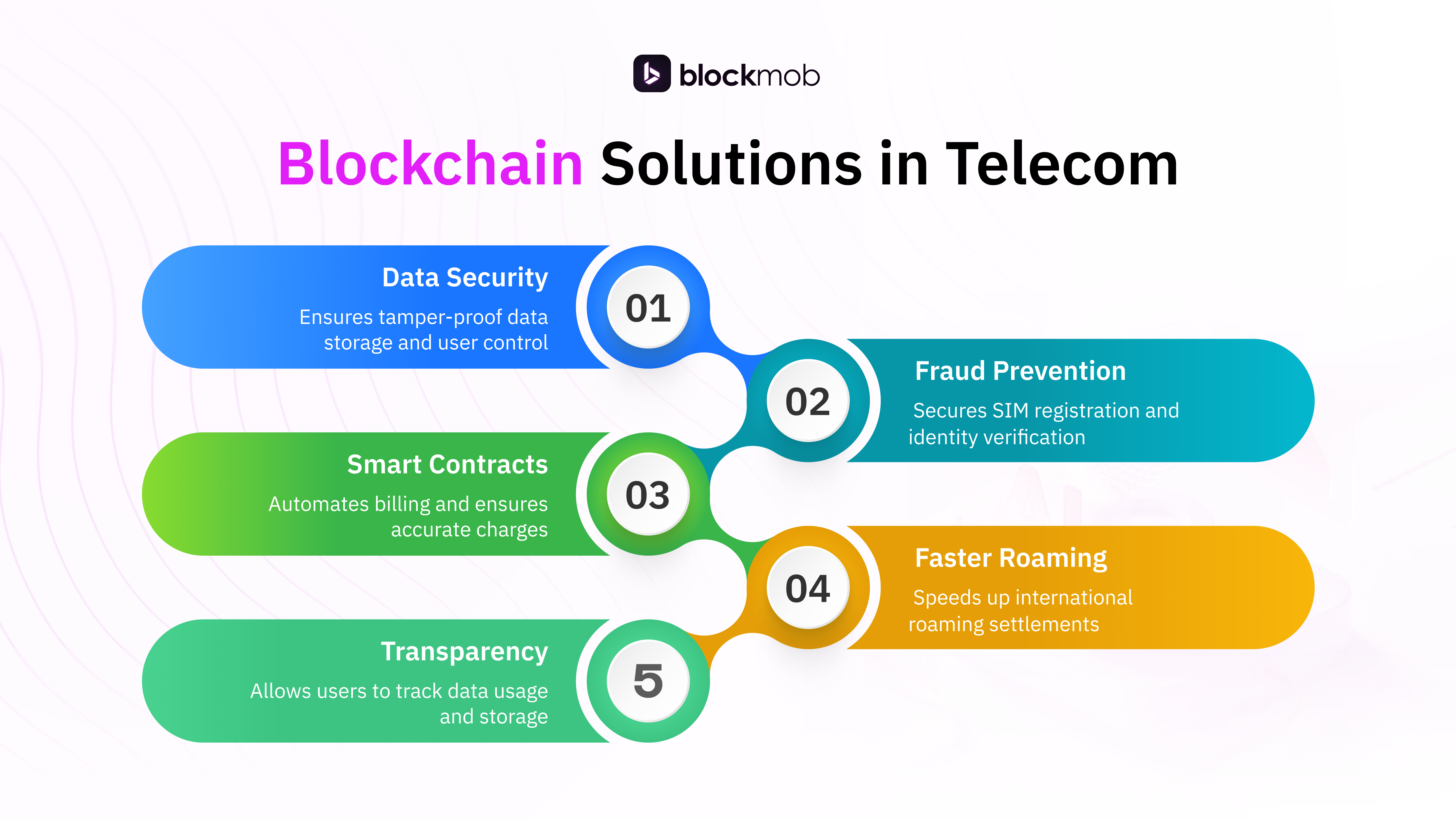
1. Data Security and Ownership
Blockchain offers tamper-proof data storage. Instead of handing all personal data to a centralised telecom database, users can control access to their identity through blockchain-based digital IDs. This ensures data is not sold or misused without permission.
2. Fraud Prevention
With blockchain-based identity verification, SIM registration can become more secure. Each identity is recorded on a transparent ledger, making fraud and duplication nearly impossible.
3. Smart Contracts for Billing
Billing errors can be eliminated through smart contracts, self-executing agreements coded on blockchain. Every call, SMS, or data use can be recorded transparently, ensuring customers are charged exactly what they consume.
4. Faster Roaming Settlements
International operators can use blockchain to settle roaming charges instantly, reducing weeks of processing to just minutes. This lowers costs and can make roaming more affordable for customers.
5. Transparency for Users
Blockchain allows users to track exactly how their telecom data is stored, accessed, or shared. This builds trust and strengthens the relationship between customers and providers.
Real-World Applications of Blockchain in Telecom
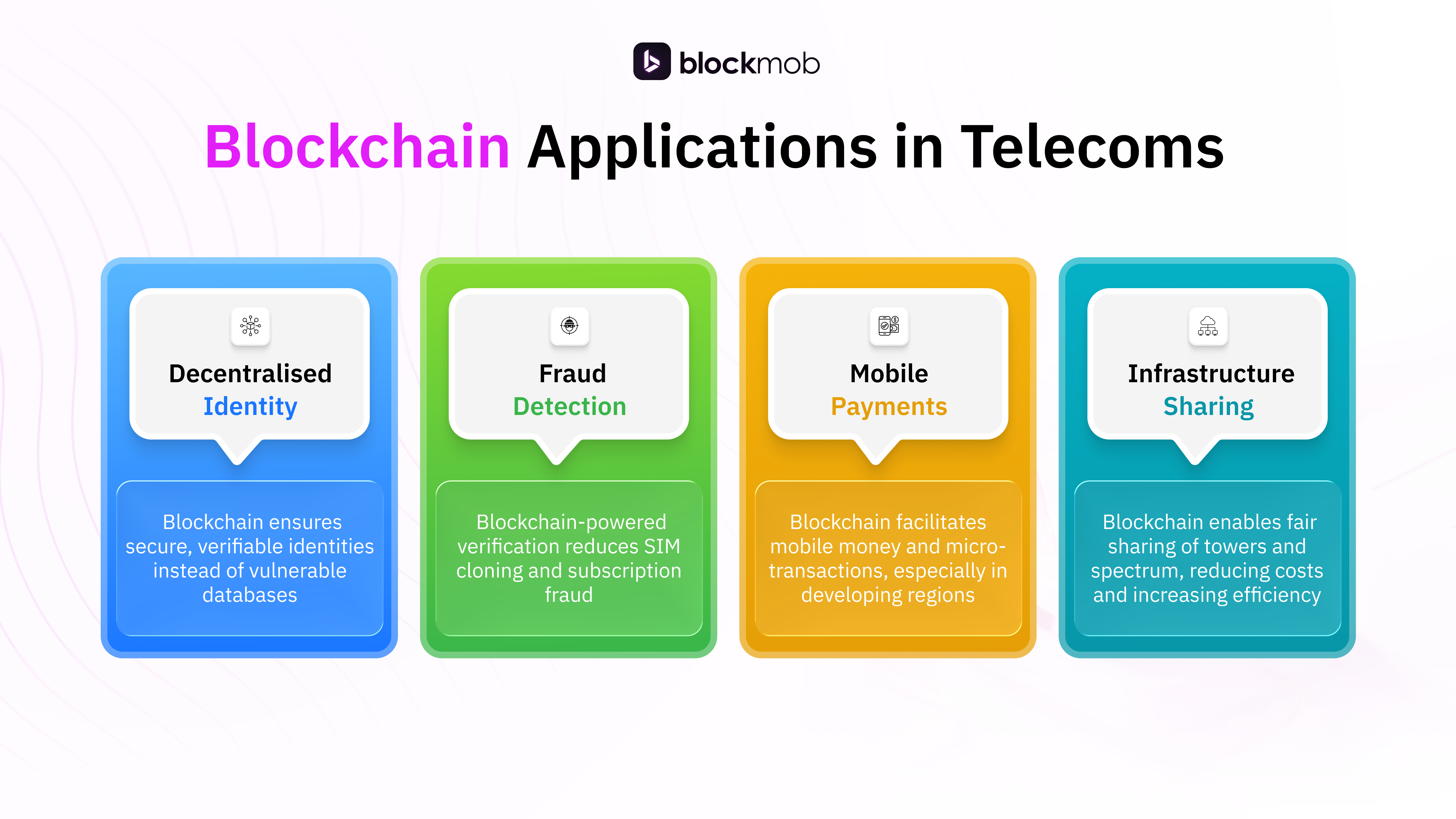
- Decentralised Identity Management: Instead of storing customer data in one vulnerable database, blockchain ensures secure, verifiable identities.
- Fraud Detection: Telecoms can reduce SIM cloning and subscription fraud using blockchain-powered verification.
- Mobile Payments & Wallets: Telecoms are already exploring blockchain for mobile money and micro-transactions, especially in developing regions.
- Smart Infrastructure Sharing: Competing telecoms can use blockchain to share towers and spectrum fairly, reducing costs while increasing efficiency.
Market Outlook
The global blockchain in telecom market is expected to grow rapidly in the coming years. Reports project billions in market size by the end of this decade, driven by telecoms’ need for secure, cost-efficient, and transparent systems. Early adoption has already started in fraud prevention and roaming settlements, but the potential applications go much further.
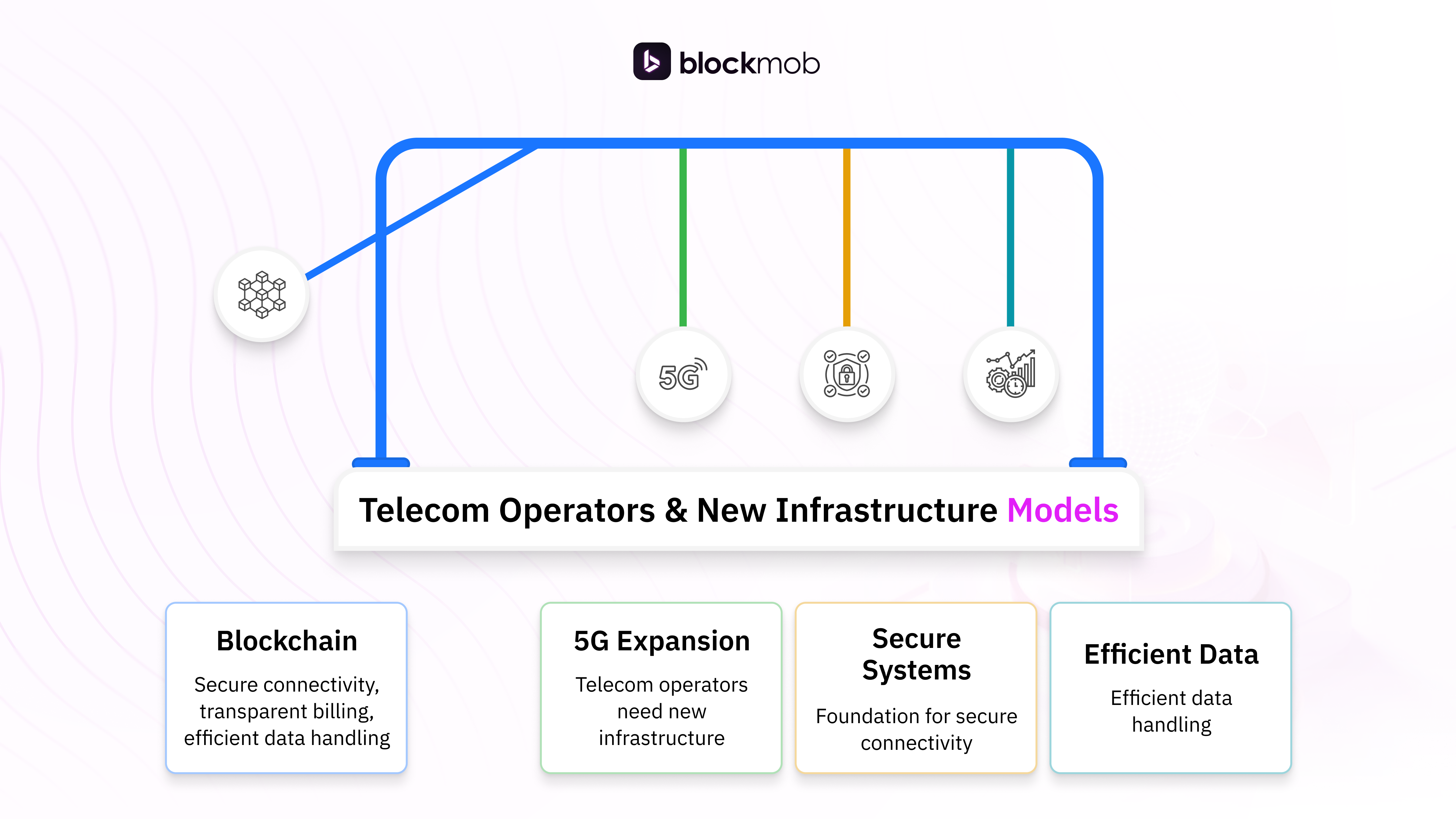
As 5G, IoT, and connected devices expand, telecom operators will need new infrastructure models. Blockchain provides a foundation for secure connectivity, transparent billing, and efficient data handling in this fast-changing environment.
Conclusion
Telecom users are tired of giving away their personal information without control, facing hidden charges, and worrying about data misuse. Telecom companies themselves are under pressure to cut costs, fight fraud, and manage massive networks efficiently. Blockchain provides a bridge between these challenges, offering both transparency and trust.
Telecom enterprises exploring blockchain will need strong technology partners who can turn these ideas into reality. The shift has already begun. The question is how quickly telecom companies will embrace it.
Telecom enterprises exploring blockchain need reliable tech partners to design and build these solutions. At Blockmob Labs, we help transform such possibilities into working products.


